Advance auto zone blog about fast cars and auto trader

Advance auto zone blog about cool fast cars, and auto trader


3/31/2006

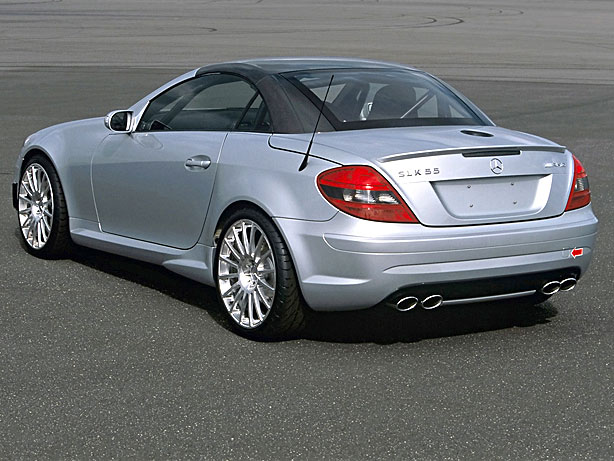
2006 Mercedes-Benz SLK 55 "AMG Ultimate Experience Asia"

Mercedes-AMG has developed an uncompromisingly sporty SLK 55 AMG for an Asian investor. The two-seater includes suspension, brakes and a cooling system that have been specifically tuned for the planned “AMG Ultimate Experience Asia” lifestyle event; plus numerous lightweight construction features which provide exhilarating handling dynamics. The design of the 265-kW/360-hp eight-cylinder roadster is based on the SLK 55 AMG safety car, which ensured maximum safety throughout the 2004 and 2005 Formula 1 seasons.

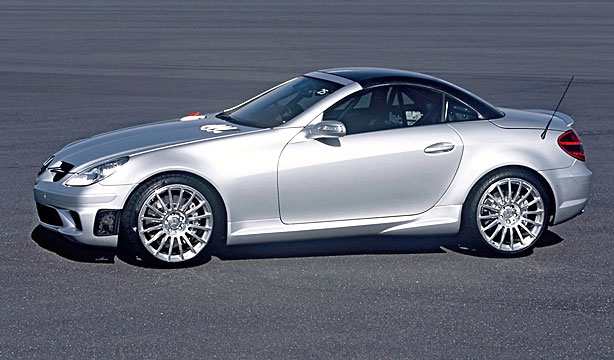
Mercedes-Benz-SLK-55Mercedes-Benz-SLK-55 2Mercedes-Benz-SLK-55 3Mercedes-Benz-SLK-55 4 The “AMG Ultimate Experience Asia” is an exclusive series of lifestyle-oriented events, aimed specifically at sports car enthusiasts in the Far East. Everyone from individuals enamoured with motorsport to clients of large corporations will be able to compete at the wheel of the 35 uncompromising AMG sports cars at ten events that are being staged by an Asian investor in countries such as China, Indonesia and Thailand. The series of lifestyle events is due to get underway at the Formula 1 Grand Prix in Sepang/Malaysia (March 17 - 19, 2006). Mercedes-AMG plans to launch a limited-edition road-going model based on the SLK 55 “AMG Ultimate Experience Asia” in the near future. The custom-designed AMG vehicles are not registered for road use so far and will only be driven on private racing tracks. However, the sale of these vehicles has prompted AMG to meet the numerous demands for purist-oriented high-performance cars.

The most striking aspect of the SLK 55 “AMG Ultimate Experience Asia” is its hardtop made from carbon-fibre composite (CFRP), a high-tech material commonly used in Formula 1 and the German Touring Car Championship (DTM). The unpainted, silk matt black roof with its visible carbon-fibre structure is a highly attractive feature that appears to change colours, depending on which angle it is viewed from and how the light strikes it. This special SLK 55 AMG also provides visual clues to its motor racing genes with, for example, new 19-inch AMG forged light-alloy wheels featuring multi-spoke styling.

Lightweight construction for further-enhanced handling dynamics

Around 25 kilograms have been saved simply by using the carbon-fibre roof with its plastic rear window and dispensing with the vario-roof mechanical and hydraulic systems. These measures lower the vehicle's centre of gravity, helping to improve handling dynamics thanks to reduced body pitch and roll combined with higher cornering speeds. Additional lightweight construction measures - including forged wheels, an optimised AMG sports exhaust system, leaving out insulating materials, fitting lighter door linings as well as a fibreglass-reinforced plastic bucket seat - compensate for the extra weight of the braking system, the larger 80-litre racing tank, the roll cage and the fire extinguishing system. The kerb weight of the SLK 55 “AMG Ultimate Experience Asia” is considerably less than 1500 kg.

Transfer from motor racing: suspension, wheels and brakes from the safety car

The suspension, wheels and braking system on the uncompromising SLK-Class are based on the safety car: for instance the set-up with firmer spring/damper tuning and harder torque strut bearings at the front axle is essentially the same as that used for the 2004/2005 official Formula 1 safety car. The wheel/tyre combination with 235/35 R 19 (front) and 265/30 R 19 (rear) tyres was likewise taken from this car. The ultra-light 19-inch AMG light-alloy wheels produced using sophisticated forging technology are new. Each wheel weighs around a third less than a conventional cast-aluminium wheel.

Another feature the “Ultimate Experience” shares with the safety car is the braking system: 360 x 22-millimetre composite brake discs with six-piston fixed callipers and special racing brake pads provide the deceleration at the front axle. Thanks to the innovative composite design with a grey cast iron brake disc connected to an aluminium bowl, peak temperatures can be avoided extremely effectively, giving the brakes outstanding fade resistance in harsh racing-circuit conditions. 330 x 26-millimetre steel brake discs with four-piston brake callipers are used at the rear axle. All the discs are internally ventilated and perforated; the front brakes, which have to deal with particularly high stresses, have specially designed cooling ducts - yet more technology adopted from motor racing.

AMG 5.5-litre V8 engine with an output of 265 kW/360 hp and a new sports exhaust system

The AMG 5.5-litre V8 engine developing 265 kW/360 hp and 510 Nm has been lifted straight from the standard-production car. Modified especially for the racing circuit, the AMG sports exhaust system with two twin chromed tailpipes at the rear provides a more dramatic sound experience at the racetrack. An auxiliary engine oil cooler has been integrated in the new-look AMG front apron; another engine oil cooler (right) and a transmission oil cooler (left) have replaced the standard-fit fog lamps. Side openings allow the warm air to be dissipated effectively. A more powerful cooling system for the power-steering oil pump and an active cooling system for the rear axle differential have also been added. These measures ensure trouble-free operating temperatures whatever the weather conditions. The transmission control system has also been specially configured for the racetrack: for example, the gears can be shifted entirely using a manual mode. There are two manual modes available - “M1”, and “M2” which allows even faster gear changes. Steering-wheel gearshift paddles, now the norm in motor racing, have also been fitted.

Optimised weight distribution for superlative handling on the racetrack

Optimised weight distribution is another decisive factor in producing handling on a par with a racing car: by moving the battery from the engine compartment to the boot and fitting an 80-litre racing tank in the boot, the weight has been distributed almost perfectly between the front and rear axle (52 to 48 percent). The racing tank with its typical foam inserts also prevents fuel from sloshing from one side to the other - the ideal set-up for minimum body movements on fast S-shaped bends. The dominant note in the interior is the practical look and feel of a racing car: the fibreglass-reinforced plastic (FRP) bucket seat with a six-point belt and fireproof fabric cover provides optimum lateral support whilst the roll cage and the fire extinguishing system ensure optimum safety.
© Source: original article on seriouswheels.com

Add To Favorites

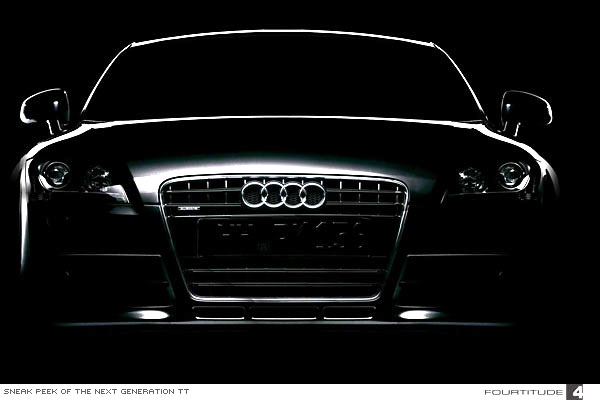
New TT Coupe, A4 and S4 Cabriolet Set for NY Debut in April

The New York Auto Show may not carry the weight of Detroit or L.A. to all of the auto industry, though the fact that this show takes place in the heart of one of the Audi brand’s top markets hasn’t gone unnoticed by schedule makers in Ingolstadt. As such, NY will play home to no less than the world launch of the second-generation TT Coupe and the latest B7 versions of the A4 and S4 Cabriolet models.

audiWhy so many new offerings for a show that has traditionally not been as critical? Well, it’s no surprise that the US market is quite important to Audi’s aggressive growth strategies. However, timing didn’t hurt wither with the show being just one week following the Internet debut of the TT Coupe.

audi 2 The rumor is that Ingolstadt initially was more skeptical about rushing the new car to New York for its show debut, though aggressive lobbying from Audi of America helped convince Germany that New York was the place to be.

The A4 and S4 Cabriolet models will hit the US market not long after their April debut in New York, though it could take some more time for the TT. Regarding the TT, there’s been no reliable word yet on when the car will hit the market, though it is a fairly safe bet that it won’t hit the market before Fall 2006.

© Source: original article on fourtitude.com

Add To Favorites

3/30/2006

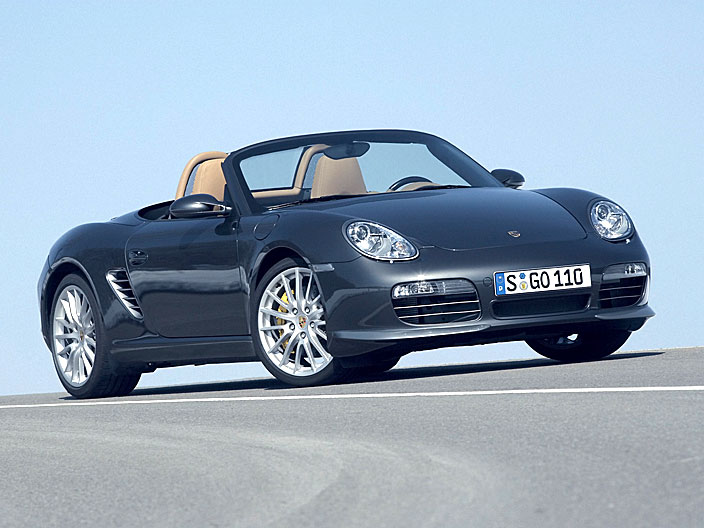
2006 Porsche Boxster S with SportDesign Package

Dr. Ing. h.c. F. Porsche AG of Stuttgart, Germany, is now offering a SportDesign package for the Boxster and Boxster S roadster models. This new individualization option comprises spoiler lips for mounting on the standard front trim, an automatically extending, redesigned rear spoiler, and a modified rear trim with an integrated diffuser.

Porsche BoxsterPorsche Boxster 2 In addition to providing a particularly striking and sporty appearance, the new SportDesign package improves aerodynamics. The lifting forces on the front and rear axles are reduced without air resistance being increased, which further supports the vehicle’s finely-tuned, roadster-specific balance. The shape of the rear trim with the integrated diffuser evokes a conscious association with the Carrera GT high-performance sports car. The automatically extending rear spoiler, which has been designed according to the divided wing principle, contributes further to this association. All of the SportDesign package’s attractive components are painted in the vehicle’s exterior color, and blend in harmoniously with the Boxster’s dynamic visuals.

Porsche is offering the SportDesign package worldwide. In Germany, it can be ordered from Porsche Exclusive for 4,060 Euros (incl. sales tax) on purchase of a new vehicle. For retrofitting, it is available from Porsche Tequipment for 3,422 Euros (incl. sales tax) plus labor.

© Source: original article on seriouswheels.com

Add To Favorites

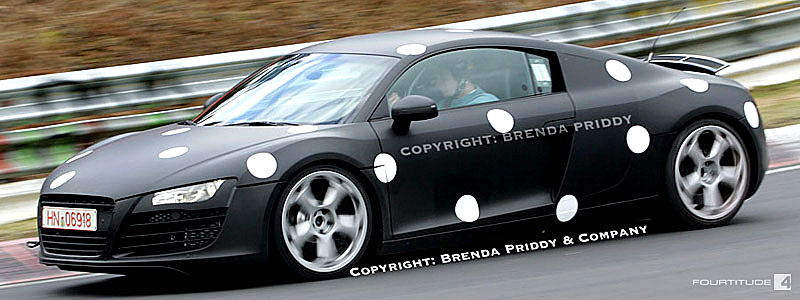
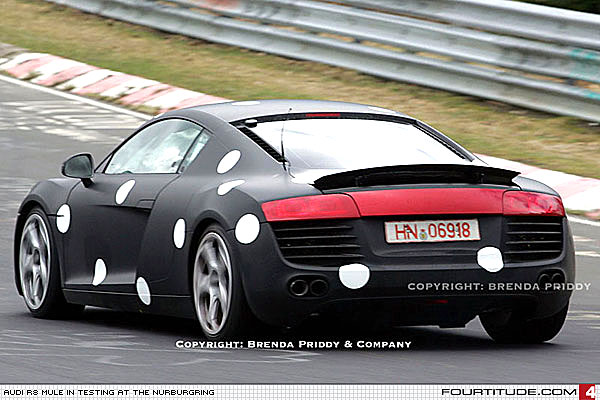
New Audi R8 Sportscar Test Mule Caught at the Nurburgring

That there will be a road-going R8 is no surprise. Audi boss Dr. Martin Winterkorn has alluded to it several times, and the company has put out a press release of its official ‘R8’ nomenclature. There’ve been several mules spotted since that time, from an A6-bodied beast to a production-looking X-files style shot from far away and through a fence. Then today, Audi decided to give more than a peak by running this black polka-dot liveried mule around the Nurburgring.

audi r8audi r8 2audi r8 3 Audi seems to be the masters of the reveal, netting more and more PR for their new models. First come the spy photos, then the microsites like the current ‘TT Lounge’, and finally the final production model. They do tease us so, and frankly we seem to love every minute of it.
The new R8’s design appears strikingly similar to the Le Mans quattro concept – so much as to make even the concept-true TT a bit jealous. Unlike the TT coupe that lost some of it’s C-pillar design in order provide better rearward vision, the R8 appears to retain the aggressive C-pillar line and maybe even the alloy accent panel of the original Le Mans concept car.

Structurally, the car will be built of an aluminum space frame, sharing some chassis components with Lamborghini’s Gallardo. The most commonly believed rumors on engines include the 4.2 FSI from the RS 4 and possibly the FSI V10 from the S8 and S6 models. Don’t be surprised to see a new 7-speed DSG such as the one in the recent Roadjet concept either.
No pricing has yet been announced, though some rumors point towards a base price of 95,000 Euros – squared off against rivals such as the Porsche 911 and Aston Martin V8 Vantage.

When will it appear for its official debut? Previous rumors have suggested September's Paris International Auto Show, which might make sense, Paris being the next major European show. However, we've heard further detail of a June debut around the 24-hours of Le Mans. Le Mans has become Audi's second home over the last few years, and the launch of a sportscar named after one of the most dominant Le Mans racecars in history might make sense. More importantly, the car wouldn't get lost in the crowd of typical auto show launches. And, as mentioned above, Audi has shown itself to be a master of the reveal.
© Source: original article on fourtitude.com

Add To Favorites

3/29/2006

2006 Hamann Ferrari F430 Spider

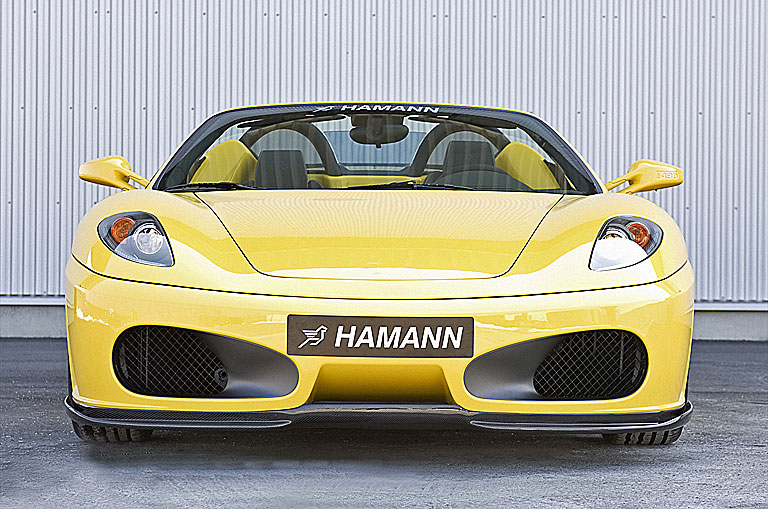
The engineers of sports-car specialist HAMANN have designed a comprehensive aerodynamics package for the Ferrari F430, taking up elements from motorsports and simultaneously presenting pure understatement. In the development of the HAMANN F430 this aspect was well to the fore as well as optimizing weight and performance.

ferrari f430ferrari f430 2ferrari f430 3ferrari f430 4The innovatively designed front spoiler gives the HAMANN F430 a striking and individual face and minimizes the lift force at the front axle. Wide side sills impart a broader appearance to the Italian car and also a more dominant roadholding. They specially underscore the dynamic line of the basic model. At the back the newly designed rear diffuser catches the eye and the rear spoiler ensures a higher downforce at the rear axle. The HAMANN aerodynamics components do not only mean an optical upgrading, but above all a remarkable increase regarding driving performance – this is proven by the fact that all add-on parts are optionally available in carbon-kevlar or fiberglass version. This makes the HAMANN Ferrari F430 definitely a powerful road-racing car, which causes a sensation!

Performance plays an important role in motorsports. This is also true for the HAMANN Ferrari F430. The HAMANN engineers have developed a complete high-performance sports exhaust system including a high-performance collector and sports catalysts. The result of this largescale modification is a performance increase of in all 48 hp, that has a correspondingly positive effect on the carґs performance. The four-branch sports rear mufflers, specially designed by HAMANN, release an absolutely powerful and sonorous sound reminding you of the background noise at a racetrack. The Laupheim company optionally offers a second tailpipe version with two tailpipes per side including throttle control.

More driving pleasure in the HAMANN Ferrari F430 can be expected of the specially designed coil suspension. The HAMANN suspension can be adjusted in height as well as in rebound and compression, thus the F430 reacts definitely more agile and more precisely to steering changes and therefore offers remarkably sportier driving dynamics.

The HAMANN Ferrari F430 is bridled by a sports brake system at the front axle, which has been adapted correspondingly to its performance. The brake system guarantees exact deceleration and permanent control of the racy Italian car from Swabia.

HAMANN stakes on a motorsports look also regarding the rims of the Ferrari F430. The multi-piece PG3 in classic five-spoke design gives an extremely powerful impression and allows a good look at the brake system. The PG3 is available in 9x19-inch dimension with tires size 255/30ZR19 front and in 11,5x19-inch dimension with tires size 295/30ZR19 or 13x19-inch dimension with tires size 355/25ZR19 at the rear axle. Alternatively you can choose the also multi-piece, forged ANNIVERSARY II. Its fine spokes clearly show the sporty character of the Swabian F430 and allow a good look at the brake system. The ANNIVERSARY II is available for the HAMANN Ferrari F430 in 9x19-inch dimension with tires size 255/30ZR19 front and 12,5x19-inch dimension with tires size 355/25ZR19 rear as well as 8,5x20-inch dimension with tires 235/30ZR20 for the front axle and 12,5x20-inch
dimension with tires size 335/25ZR20 for the rear axle. Brand new is the HAMANN alloy wheel “EDITION RACE” in 20 inch. It is available in 8,5 x 20 for the front axle and 12 x 20 for the rear.

The interior of the HAMANN Ferrari F430 is a successful mixture of luxurious and sporty features. An exclusive full leather interior in all colors as well as a high-quality set of mats give an elegant impression. Suiting racing seats and sills create motorsports feeling.

No doubt, the HAMANN Ferrari F430 is a pure-blooded racing car with road licensing, surely causing astonished and admiring looks. The driver, however, is offered optimal driving pleasure and individuality.

© Source: original article on seriouswheels.com

Add To Favorites

Beauty Treatment and Muscle toning for the Seat Ibiza from JE DESIGN

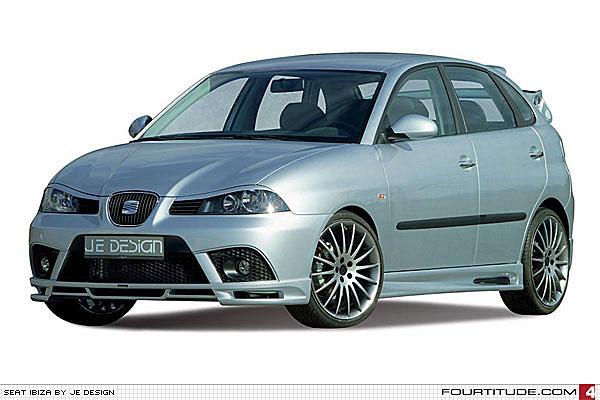
Following Seat's recent facelift to the Ibiza, JE DESIGN is now offering new bodywork attachment parts. This tuning specialist from Leingarten also adorns this compact Spanish car with two hefty power boosts and new wheel rims.

seat ibiza
seat ibiza 2 The first power boost concerns the 1.9 l Diesel, which, in the production car, generates 118 kW/160 bhp and a torque of 330 Nm. Following JE DESIGN's modification to the engine management system, the engine produces a solid 136 KW / 185 bhp and 390 Nm torque on the front axle. A top speed of 225 km/h (production car: 220 km/h) and 7.0 seconds (production car: 7.6 sec) to sprint to 100 km/h are something to shout about. At the same time, the TDI still passes the EI check. Needless to say, the power boost comes complete with a TЬV parts certificate. The tuning specialist breathes extra power into the 132 kW/180 bhp generating 1.8 l Turbo petrol engine also by means of a modification to the engine management system. The 144 kW/ 196 bhp then permit an increase in the top speed by three km/h up to 232 km/h, while a generous increase in torque from 235 to 300 Nm allows the Ibiza to accelerate from 0-100 km/h in true GTI style in 6.9 as opposed to 7.7 seconds.

At the front end, a striking JE DESIGN front spoiler reduces the lift on the front axle. Headlight lens caps and TЬV-exempt tail lamp housing made of ABS for Ђ89 lend this Spaniard a much smarter appearance. The headlight lenses in particular work wonders, constricting the somewhat crudely designed original lights to a more respectable size. A visual lowering and a sportier side profile are created by fitting a set of side sills. The rear view is adorned with a chrome plated twin tailpipe (2 x 90 mm), which is perfectly matched to the diffuser insert in a carbon-fibre look. The latter can be fitted in addition to the JE DESIGN rear apron attachment and lends the Ibiza a more powerful appearance from behind. To round things off, extra racing flair can be created by fitting the JE DESIGN roof edge spoiler as well as the three-piece boot lid rear spoiler supplied with a type approval certificate, and which can be set at any angle.

The Ibiza's cornering speed is vastly improved by fitting suspension lowering springs, which lower the car by around 30 mm for.

Turning to the wheel rims in an 18-inch design, JE DESIGN gives customers the choice between the chrome-look wheel set "Multispoke SLC" in the dimension 7.5 x 18" ET 35 fitted with size 215/35 ZR 18 tyres or the Multispoke wheel set in the same dimension in Shadow Silver.

© Source: original article on fourtitude.com

Add To Favorites

3/28/2006

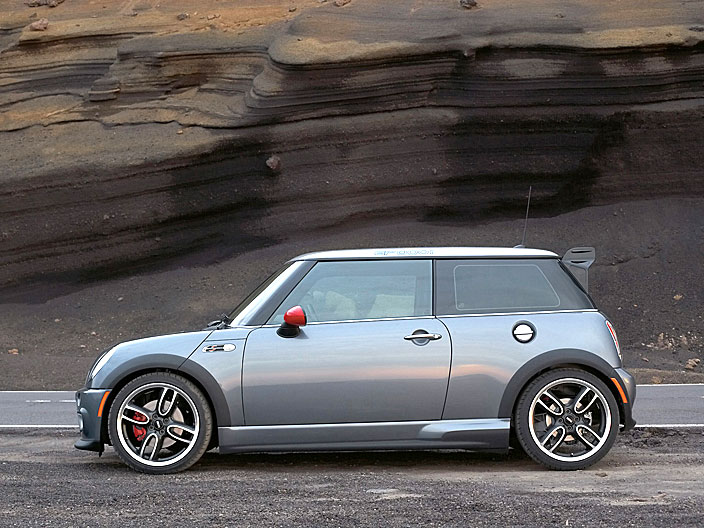
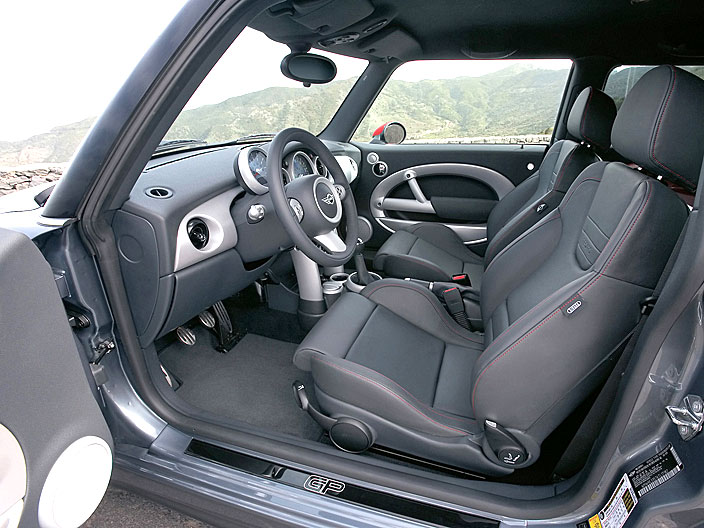
2006 Mini Cooper John Cooper Works GP Tuning Kit

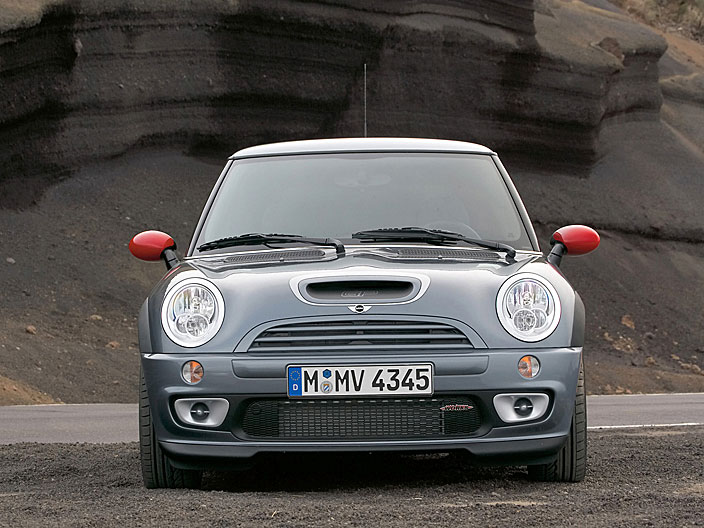
Sometimes less is more. For example when it comes to less weight in a particularly sporting car. Which explains why the MINI Cooper S with the John Cooper Works GP Kit is approximately 50 kilos or 110 lb lighter than the “standard” model. Together with an increase in engine power to 160 kW/218 hp for top speed of 235 km/h or 146 mph, this strictly limited special model offers a standard of performance once again significantly better than the performance data of the most powerful MINI available from the factory so far, the MINI Cooper S with its John Cooper Works GP Tuning Kit.

2006 mini cooper2006 mini cooper 22006 mini cooper 3
2006 mini cooper 42006 mini cooper 5 The two letters “GP” in the name of this very special model stand for “Grand Prix” and thus clearly pay tribute to the motorsport DNA of this truly exceptional MINI. The MINI Cooper S with the John Cooper Works GP Kit will be limited to a production run of exactly 2,000 units and will be available in Europe as of July 2006.

1.6-litre compressor engine developing 160 kW/218 hp.

The unique MINI CHALLENGE Racing Series has been thrilling en­thu­siasts and racing fans in Germany and many other countries the world over since 2004. The MINI racing cars entered in these exciting events feature the 1.6-litre compressor engine of the MINI Cooper S boosted to an even higher level of output by the John Cooper Works Tuning Kit. In the production model available from every MINI Sales Partner and naturally covered by the full works warranty, the John Cooper Works Tuning Kit increases engine output to an impressive 154 kW/210 hp. Modifications to the intercooler on the compressor and the electronic engine management increase engine output on the MINI Cooper S with the John Cooper Works GP Kit to 160 kW/218 hp clearly symbolised by the throaty sound of the twin-pipe sports ex­haust.

With this kind of extra power, the fast-revving engine featured in the new MINI Cooper S boosted by the John Cooper Works GP Kit offers even more dynamic and agile performance with acceleration from a standstill to 100 km/h in less than 6.5 seconds. And to get this extra power safely on to the road, the Limited Edition MINI comes as stand­ard with a limited-slip differential largely preventing the drive wheels from spinning on either side and thus optimising traction above all on slippery roads. DSC Dynamic Stability Control comes as a non-cost option, further increasing the driving safety of the MINI Cooper S with its John Cooper Works GP Kit.
High-performance brake system and sports suspension from John Cooper Works.

An essential feature of the John Cooper Works GP Kit is the sports suspension with components carefully matched to the greater power of the engine. Even firmer springs and stronger dampers enhance the outstanding agility of the MINI Cooper S with its John Cooper Works GP Kit particularly in bends and on winding roads. The high-performance brake system with 16-inch inner-vented discs, in turn, ensures optimum deceleration and short stopping distances, red-painted brake callipers on the front wheels providing a particu­lar­ly visual highlight. Low-profile tyres and 18-inch light-alloy rims developed especially for the MINI Cooper S with the John Cooper Works GP Kit are further standard features. Through their lower weight, these wheels reduce the car’s unsprung masses and at the same time enhance the sport­ing performance of the MINI Cooper S with the John Cooper Works GP Kit.

Special aerodynamic package and exclusive colour scheme.

The MINI Cooper S with its John Cooper Works GP Kit also features an exclusive Aerodynamics Package. New highlights are the front and rear air dams, the extra-low side-sills, and the underfloor cover. The roof spoiler with its wing profile, in turn, is already featured in a simi­lar configuration on some of the cars raced in the MINI CHALLENGE. The Aerodynamics Package significantly improves the car’s drag co­efficient and downforces both front and rear, benefiting both the top speed of the MINI Cooper S and its driving behaviour at high speeds.

The new MINI Cooper S with its John Cooper Works GP Kit stands out clearly from all other MINIs at very first sight through its exclusive metallic paintwork in Thunder Blue. Another exclusive feature is the combination of this highly attractive colour with the roof finished in Pure Silver. The surrounds on the air scoops along the engine com­part­ment lid and in the front air dam are also finished in Pure Silver, while white direction indicators come as standard. The exterior mir­rors, in turn, come in an attractive contrasting colour - fiery Chili Red.

The first production MINI with only two seats.

The purist interior of the MINI Cooper S with its John Cooper Works GP Kit exudes more than just a “touch” of motorsport. But at the same time driving and riding in the new model is not only more sport­ing and dynamic, but also more comfortable, both the driver and passenger enjoying sports seats from Recaro, the renowned German specialist, offering perfect side support, adjustable thigh support and integrated seat heating. The seats themselves are finished in finest Panther Black leather, with red seams again providing a dynamic and sporting contrast.

The special three-spoke leather sports steering wheel enhances the driving pleasure offered by the MINI Cooper S with its John Cooper Works GP Kit to an even higher standard. The direct steering trans­mission ratio, in turn, enables the driver to steer this exceptional MINI with ultimate precision round every bend, almost like in a go-kart. In­tegrated multi-function buttons, in turn, allow the driver to operate the radio and cruise control without even taking his or her hands off the wheel.

Through its particular design with the rev counter positioned behind the steering wheel and the central arrangement of the speedometer, the dashboard again underlines the sporting character of the car. Both displays in their classic circular design come in Anthracite, with red needles ensuring excellent clarity and readability. The display of the on-board computer featured as standard, finally, is integrated in the rev counter.

The principle that “less is sometimes more” is also borne out clearly at the rear, with the entire rear seat bench being dropped in the inte­rest of weight reduction. So the space formerly taken up by the rear seats is now available as a flat loading area further enhancing the practical value of the MINI Cooper S with its John Cooper Works GP Kit. And for even greater convenience, the entire floor of the lug­gage compartment can be folded up in Z-arrangement for easy ac­cess to two additional storage boxes.

In the interest of even lower weight, the engineers responsible for developing this outstanding new model have taken a close and de­tailed look also at the technical features of this very special sport­ing MINI: On the rear axle track control arms made of aluminium replace the conventional units - again a special feature carried over from motorsport. Further modifications on the body of the car as well as the omission of air conditioning (which is however available as a no-cost option) and of some of the sound-deadening material all come together to reduce the overall weight of the car by approximately 50 kilos or 110 lb versus a MINI Cooper S with an average range of equip­ment, thus optimising the car's power-to-weight ratio.

Wide range of standard equipment.

The wide range of standard equipment boasted by this particularly sporting special version of the MINI leaves virtually nothing to be de­sired. Apart from the special components of the John Cooper Works GP Kit (power unit, suspension, Aerodynamics Package), this special model also comes as standard with an on-board computer, air condi­tioning (no-cost option) and velours footmats. Leather sports seats by Recaro, a radiator complete with CD player (Boost model), the leather sports steering wheel with multi-function buttons, a Lights Package as well as sundim glazing on the rear side windows and the rear window are all standard. Electronic DSC Dynamic Stability Control is available as a non-cost option.

Again reflecting the special features of a Limited Edition collector’s item, the MINI Cooper S with the John Cooper Works GP Kit comes with an individual production number (1-2,000). And boasted on both the roof and the dashboard in Black on Silver, this number clearly confirms once and forever that this MINI is limited to just a small collection of very special cars for the very special customer.

© Source: original article on seriouswheels.com

Add To Favorites

Production of Audi Q7 in Full Swing

Widespread acceptance with customers
Production to be stepped up further
Launch in additional markets

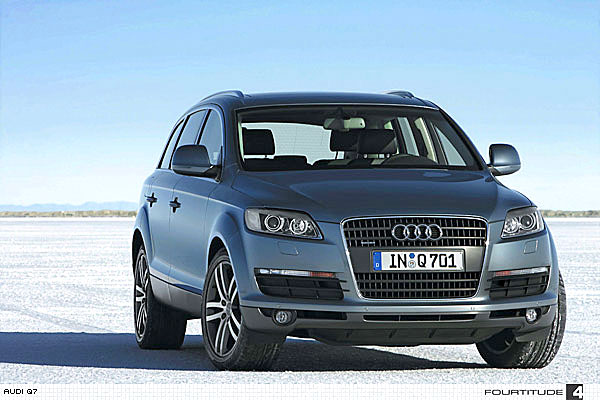
audi Q7 The new Audi Q7 is proving to be a big seller. Although it was only launched at the start of March, more than 16,000 customer orders have already been received. The Q7 will have been launched in most European markets by the end of March, followed by the USA and China in June and all other markets in the second half of the year.

“The production lines are humming,” says Dr. Jochem Heizmann, Audi Board Member for Production. The plan is to step up production from the current 200 units a day to 300 by the early summer. Heizmann: “We will pull out all the stops in order to meet our customers’ expectations. Organisational measures already introduced – such as production throughout the holiday period or in three shifts – will enable us to reach this goal.” In the future, the annual production figure in a full year will be between 50,000 and 70,000 vehicles.

Built in Bratislava under Audi’s direction, the Q7 – a third-generation SUV (sports utility vehicle) – sets new standards in the areas of design, performance, comfort, luxury and safety. Production of the new Audi Q7 is a genuine joint affair. Whereas final assembly of the SUV is taking place at an ultramodern plant in the Slovak capital of Bratislava, Audi’s German plants at Ingolstadt and Neckarsulm are supplying all key body elements, as well as a large number of its components. The power units for the Q7 are being built at Audi’s Hungarian engine plant in Gyцr. A total of some 3,000 workers are involved in production of the Q7 at the plant in Slovakia. A total investment in the triple-digit million euro range has been made in the vehicle’s production facilities.

© Source: original article on fourtitude.com

Add To Favorites

3/27/2006

Spyker D12 Peking-to-Paris

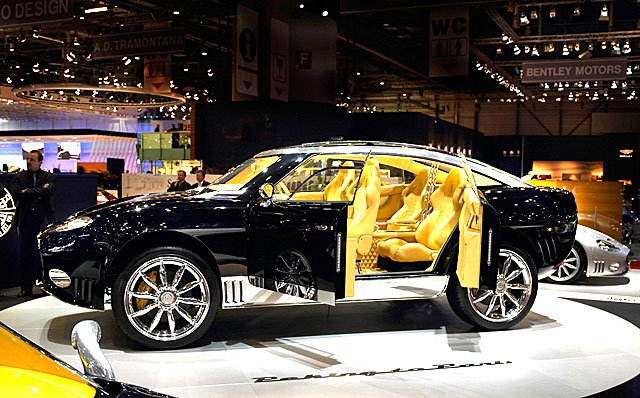
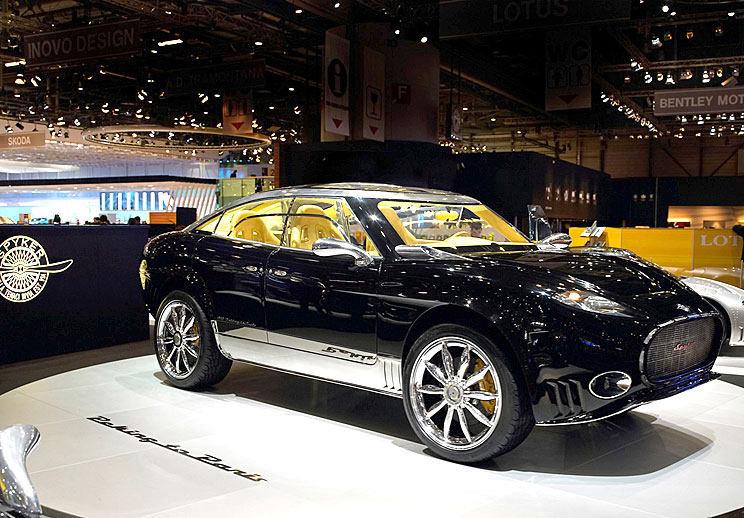
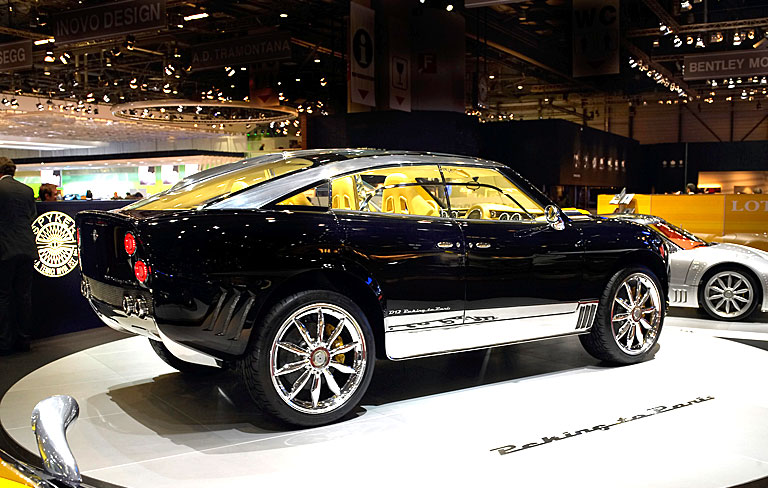
Geneva, Switzerland, 28 February 2006: His Excellency Khaldoon Khalifa Al Mubarak, CEO Mubadala Development Company and Victor Muller, CEO Spyker Cars, today unveiled the Spyker D12 Peking-to-Paris at the 76th Salon International de l’Auto in Geneva.

Spyker D12Spyker D12 2Spyker D12 3Spyker D12 4Spyker D12 5The world premiere of this Super Sports Utility Vehicle (SSUV) marks the introduction of a second product line for Spyker who are already known for producing the Spyker C8 Spyder, Laviolette and Double12 and C12 LaTurbie super sports cars. The Spyker D12 Peking-to-Paris is a four-wheel drive, four-door, four-seater luxury Super Sports Utility Vehicle with a spacious interior and a high performance W12 500 bhp engine. Production is due to start in the fourth quarter of 2007. This is the fourth time that the Dutch manufacturer of exclusive high quality hand-built sports cars and now SSUVs is present at the Geneva Motor Show since 2000.

Victor Muller, CEO Spyker Cars, says: “Today, 28 February 2006, the unveiling of the prototype of the D12 Peking-to-Paris makes this probably the most important day in the brief history of our company. Founded on the first day of the new Millenium, Spyker have introduced four different car models in less than six years. This is our fifth new model. In four years we have participated in the 24-hours of Le Mans three times, with our fourth entry this coming June 2006, this time with a two car team entry confirmed. We grew from a two band band to over 100 employees. From a small two partner business to a public company since May 2004, attracting very strong shareholders such as Mubadala Development Company from Abu Dhabi and MerchantBridge from London. We were offered a key role in the major movie production Basic Instinct 2. Last but not least we have been awarded several prestigious international awards such as the recently awarded: ‘Best New Exotic Car 2006’ in the USA and ‘Favourite Sports Car’ in Beijing, China. Last year we produced 48 cars and that number will rise to over 100 this year. Now we are introducing a second product line with this unique vehicle, charting uncharted territory. Therefore I am proud to say: Spyker is moving ahead very very quickly!”

Muller continues: “ None of this could have ever been achieved without the relentless efforts of our employees and the amazing support from our partners, VW Group and Audi, Coventry Prototype Panels, Karmann AG and many others to which we are extremely grateful. Now that the C-line of sports cars is in full production we decided seven months ago to develop a prototype of what we saw as the logical succesor to one of the most innovative cars in history, the very first six-cylinder, four wheel drivecar on the globe, the 1903 60 HP Spyker Grand Prix car. Spyker’s heritage as a four-wheel drive pioneer and the tremendous benefits, it would bring to the motor car, laid the foundation for the car we are about to unveil: the Spyker D12 Peking-to-Paris.”

Spyker D12 Peking-to-Paris: The Heritage

The Spyker D12 Peking-to-Paris traces its origins back, not to one, but three significant Spyker models, each of which contributed significantly to the company’s glorious heritage. This heritage is one of our five core brand values and influences the current models heavily. The second inspiration for the car is Spyker’s unique aviation heritage which created the first Spyker after the Great War in 1919: the Spyker ‘Aerocoque’ with fuselage body and its remarkable fintail. This model was the first Spyker in which the company introduced aircraft technology and design in its road cars. The Aerocoque’s fintail led to the functional roof fin on the SSUV. The final historical reference for the SSUV was its namesake from the Peking to Paris race of 1907, the most gruelling race of all time, in which the Frenchman Goddard entered his almost standard, factory-backed, Spyker 18/22 HP.

On 10 June 1907 five cars set out on what was to become an unprecedented challenge to man and machine. It was the final conquest of he motor car over non motorised mains of transport. Goddard finished second after three months of crossing territory where, for the most part, no car had ever dared to go. The SSUV has been named in honour of this race and the pioneering spirit it embodied: those men charted uncharted territory, something the modern Spyker D12 Peking-to-Paris does in its own very way: it enters an entirely new market segment, that of the SSUV which is currently uncharted.

Muller continues: “We have high expectations for the new SSUV. Its future looks extremely promising and we have already received numerous orders based solely on the design drawings. We expect the car to be very popular in our primary markets such as the Middle East, the United States and China, its sales numbers likely exceeding those of our sports cars. Our SSUV combines high speed performance with excellent off-road capabilities whilst offering its passengers a spacious and luxurious cabin as well the exquisite Spyker signature cockpit interior. It will come standard with state of the art AP Racing carbon ceramic matrix brakes and Koni FSD shock absorbers.”

The Spyker D12 Peking-to-Paris: The Vehicle

Demographics in the Western world show an aging client base for super sports cars. An entire generation of customers, used to driving super sports cars, is facing an interesting challenge: matching their desire to continue to enjoy driving sensations of a super sports car with the harsh reality of their exacting family life and, unfortunately, their age. The alternative is now available: a relatively light weight 1850 kgs SSUV which performs like a super sports car but offers four comfortable seats, easy access through four doors and a spacious luggage compartment. Longing for super sports car excitement, for cars that tantalize all of their senses, for cars that combine exceptional performance with exotic looks. Cars built with passion, cars with soul. Exquisite pieces of car jewelry. Such a car now exists.

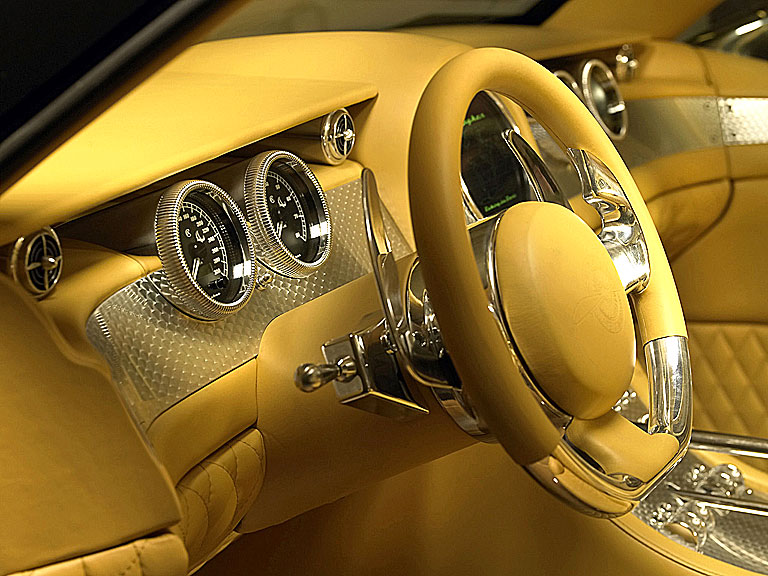
The Spyker D12 Peking-to-Paris is an all aluminium, permanent four-wheel drive super sports utility vehicle. The rear doors are rear-hinged coach doors, so-called ‘suicide doors’. It is powered by the 6.0 litre, 12 cylinder, 500 bhp W12 engine from Volkswagen AG and accelerates from 0-100 KM (0-60 MPH) in 5.0 seconds. The six-speed automatic transmission features a multifunctional steering wheel with F1 style shift paddles, a triple dashboard designed in the style of an airplane cockpit, and a sumptuous interior. The vehicle has an all aluminium body fitted to an aluminium space frame, and sits on 24” Aeroblade ™ wheels. It has a length of 4.95 m, a width of 2.0 m excluding mirrors, a minimum height of 1.68 m and a maximum height of 1.77 m and weighs 1895 Kg. The fuel tank capacity is 100 litres (22 gallons). Top speed is 295 km/h (185 mph). The car is custom-hand built using only the best materials available.

New website

Today Spyker Cars is also launching a complete new website. The new design of www.spykercars.com is based on Spyker’s five core brand values: heritage, design, craftsmanship, performance and exclusivity. It is easily accessible and contains many of Spyker’s beautiful and award winning images and comprehensive information on company,activities and technical information of all car models. A Chinese language version of the site is to be launched in the coming months. Other languages, such as Arabic, are to follow in the near future.

New dealers

New dealers have been appointed for the USA in Detroit, Michigan; Pompano Beach, Florida; Beverly Hills, California and for the Middle East in Jeddah, Saudi Arabia; Kuwait City, Kuwait; Dubai and Abu Dhabi, UAE. For all worldwide dealers see www.spykercars.com

2006 Raceprogram

Spyker Squadron has expanded its 2006 race program in view of its promising results in 2005. Two factory Spyker C8 Spyder GT2Rs have been entered in 10 races including the 12-hours of Sebring (Florida, USA) to be held on 18 March, the 24-hours of Le Mans (France), all Le Mans Endurance series races and some FIA GT races. The Le Mans organisation Automobile Club de L’Ouest (AC0) has already accepted two Spyker race cars for the 74th “24-hours du Mans” on 17-18 June 2006

© Source: original article on seriouswheels.com

Add To Favorites

RS 4: The Perfect Company Car for Almost Everyone

On Thursday Audi factory driver Heinz-Harald Frentzen was in a particularly big hurry to fly home to his wife Tanja from the DTM tests at Brands Hatch: the Frentzen family are expecting their third child. So it is a welcome coincidence that Audi has just launched the right car for large families on the market. "We are looking for something with seven seats,” says the former Formula 1 driver. "So the new Audi Q7 is ideal for us."

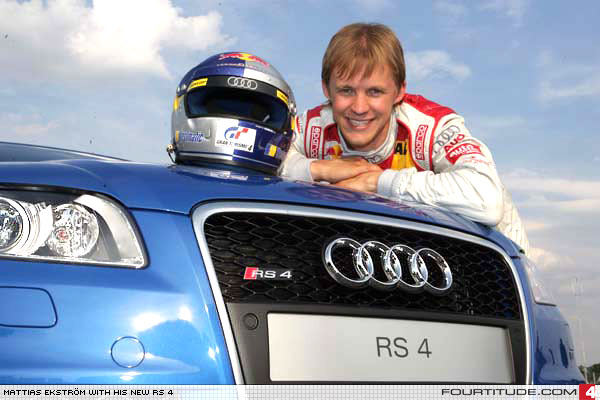
audi rs4audi rs4 2This means that "HHF” will be stepping out of line a bit because all Audi drivers are furnished the new Audi RS 4 as their "company car” this year. "It’s a real fun car,” raves Timo Scheider, the second Audi newcomer, about the 420-hp RS4. The eyes of his colleagues from the drivers’ squad, as well, start beaming when they talk about the RS4. "Apart form the Audi A4 DTM this is my absolutely favourite Audi,” says Mattias Ekstrцm, the 2004 DTM Champion.

Tom Kristensen, who – as a perfect complement to his new diesel sports prototype commitment with the Audi R10 TDI – privately drives an Audi A6 with a TDI engine, is happy about his new company car as well, but has set his sights on yet another quattro GmbH product: "I’d like to have the very first Audi R8 built in Neckarsulm.” After all, the Dane celebrated five of his Le Mans victories with the racing version of the R8.

© Source: original article on fourtitude.com

Add To Favorites

3/24/2006

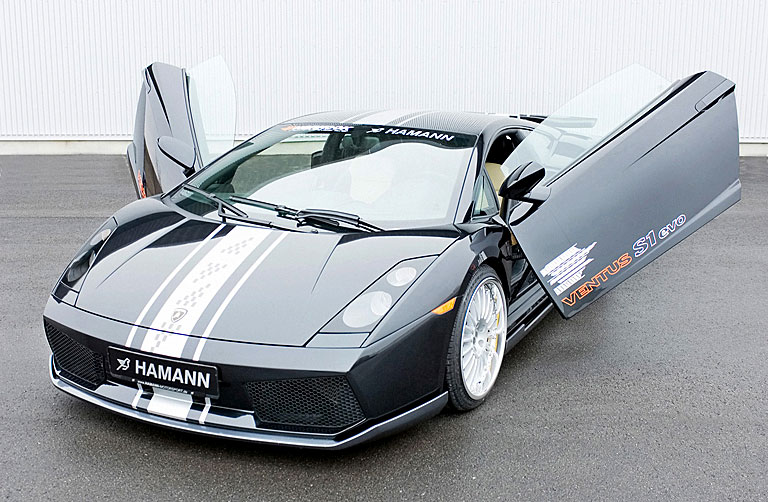
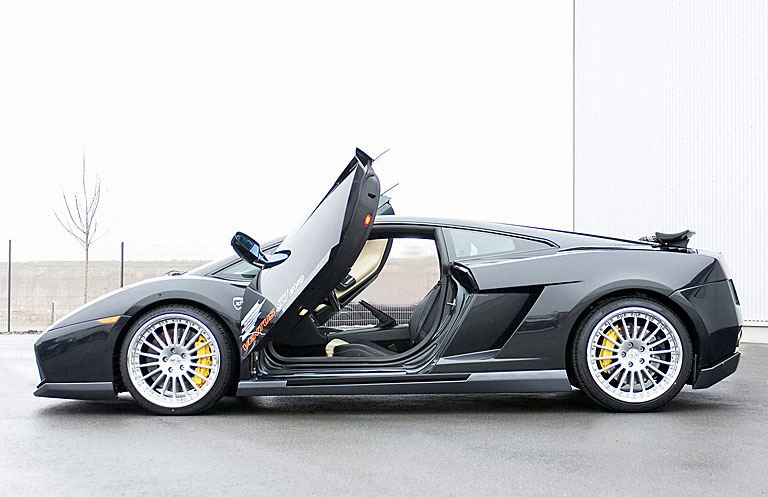
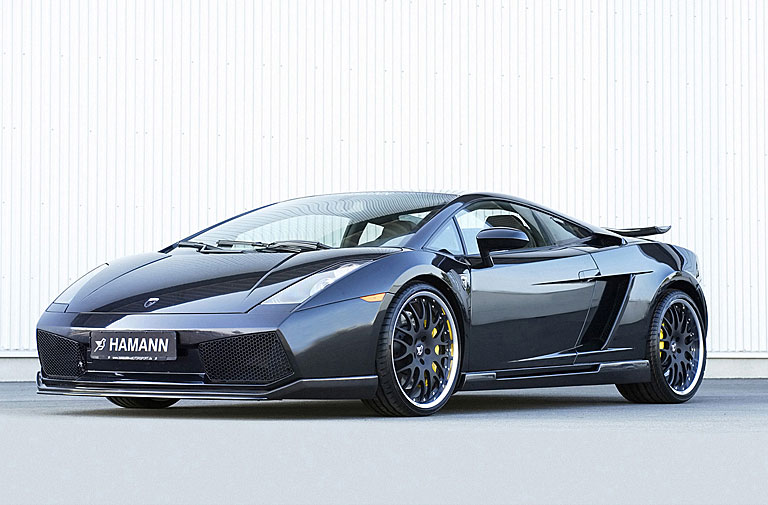
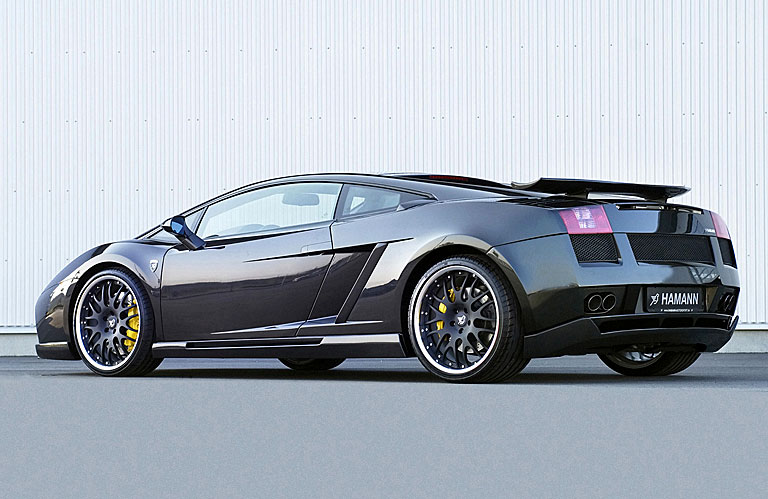
2006 Hamann Lamborghini Gallardo

Lamborghini - the brand is synonymous with sporty automobile pleasure for the street. And when you see the new Gallardo, you also know why. 500 hp is at work inside this attractive and, most importantly, airflow-optimized body. HAMANN MOTORSPORT is now offering a styling and tuning packet especially for the Gallardo that brings its motorsport character clearly into focus, and that gives this noble »bull« even more performance.

Hamann Lamborghini GallardoHamann Lamborghini Gallardo 2Hamann Lamborghini Gallardo 3Hamann Lamborghini Gallardo 4Hamann Lamborghini Gallardo 5 Already the first impression the HAMANN Lamborghini Gallardo makes indicates that this is hardly a standard model. The HAMANN specialists constructed a comprehensive aerodynamics program for this racy sports car. The front is dominated by an innovatively designed front spoiler. The HAMANN engineers indeed oriented themselves in the develop on Italian design, but they also included the typically powerful and sporty stylistic elements of the tradition-rich company. The impressive appearance is also reinforced by the frontal airscoops, thebroad side skirts and the air intake screens located on the sides. No question about it - the HAMANN Lamborghini Gallardo is a genuine racing car for the street. More than anything else, the rear portion makes this clear. A mighty, three-piece rear wing а la motorsport doesn’t just assure the appropriate optics, but also increased application force on the rear axle at higher speeds. Almost the same applies for the wide HAMANN rear diffuser. It makes the rear appearance of the Gallardo unmistakable, and the car virtually sucks itself onto the asphalt.

Thanks to the comprehensive aerodynamic components, the HAMANN Lamborghini Gallardo makes a clearly sportier and more exclusive impression. And it wouldn’t be a real HAMANN if the performance was not optimized as well. By using sport steel catalytic converters and two double-pipe sport mufflers with 76 millimeter diameter in a V2A stainless steel design, the performance of the HAMANN Lamborghini was increased by a total of 28 hp up to 528 hp. At the same time, the maximum torque was increased by 50 Nm to a total of 560 Nm as a result of this modification. This data speaks clearly and confirms the external appearance.

The sporty-sophisticated concept of the HAMANN Lamborghini Gallardo is rounded off by the multi-part light metal ANNIVERSARY II wheel rims. These exclusive wheels, in a multispoke design, convey a sense of pure motorsport feeling. The silver wheel rim, with its highly polished INOX steel lip, makes a simultaneously refined and luxurious impression. The front axle bears wheels sized 9 x 19 inches with 235/35 Z R19 tires. In the rear, the ANNIVERSARY II in the size 12 x 19 inches with 295/30 Z R19 tires was selected.

Thanks to its aerodynamics packet, the HAMANN Lamborghini Gallardo is optically a thoroughbred racing car for the street. The performance increase also gives this proud bull the necessary power.
More than anything else, the successful mixture of power, sportiness and exclusivity make the
HAMANN Lamborghini Gallardo so special.

© Source: original article on seriouswheels.com

Add To Favorites

TT West Registration Opens - All Enthusiasts Welcome

Registration is now open for the the largest and longest running North American Audi TT owner's and enthusiast's event held in the Western half of the United States, TT-West.

audi ttThis year's event is scheduled to be held in the high-mountain southwest Colorado town of Durango from Thursday May 18 to Sunday May 21, 2006 with the event headquartered at the Doubletree Hotel Durango.

We have a great agenda planned for this year's TT-West event with plenty of great driving! We will be visiting Mesa Verde National Park, taking a day-long drive on the San Juan Skyway, visiting Telluride, CO... and much more!

Make sure to also secure your accommodations at the official event headquarters, the Doubletree Hotel Durango. The hotel may be close to or may already be sold out, so it would be advisable to call them as soon as possible if you plan to attend.

Please visit the official TT-West 2006 web site for more information and for online registration.
TT-West.org

See you this May in Durango, Colorado for TT-West 2006!

© Source: original article on fourtitude.com

Add To Favorites

3/23/2006

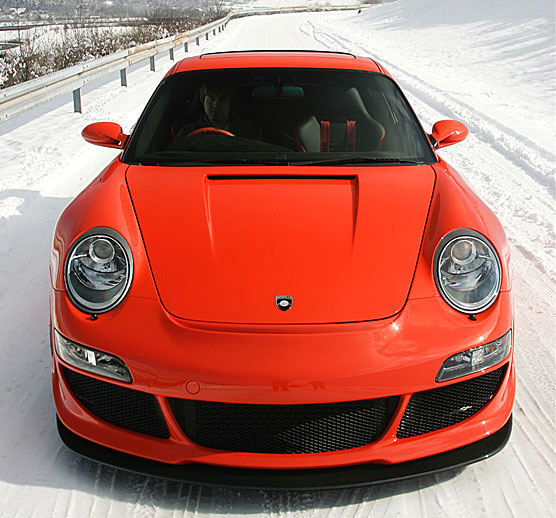
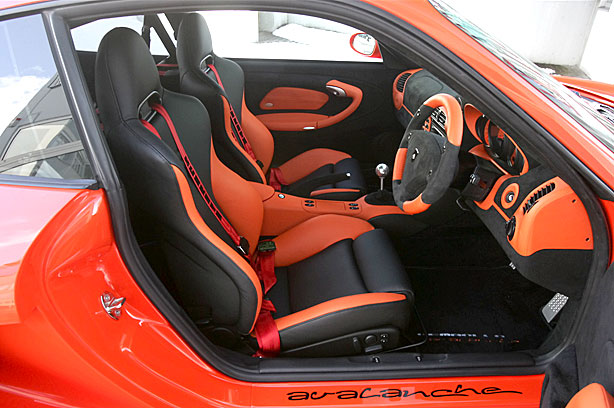
2006 GEMBALLA GTR 650 Evo Orange based on Porsche 997

The bodies and the interior fittings of the new AVALANCHE series presentthemselves as exclusive and unique as the driving performance and the safety components. All parts of the body consist of carbon. Carbondoors and plexiglass-windows are optional. Also upon request and modeled after sports cars on the speedway GEMBALLA mounts a front end that can be completely removed.

gemballa gtr 650gemballa gtr 650 2gemballa gtr 650 3gemballa gtr 650 4gemballa gtr 650 5
Specifications :

Engine : 3.6 liter six
Weight : 3164 lbs
Aspiration : turbocharged
Torque : 546 lb-ft @ 4700 rpm
HP : 650 hp @ 6800 rpm
HP/Weight : 4.9 lbs per hp
0-62 mph : 3.9 seconds
Top Speed : 208 mph

© Source: original article on seriouswheels.com

Add To Favorites

The Nothelle Audi A4 – Combining Power and Elegance

- Power output increased by up to 310 bhp
- Sophisticated, elegant aerodynamic packages
- Quadruple exhaust and nothelle "NOVEDRA VII SPORT" 19-inch wheels


Nothelle Audi A4 Nothelle Audi A4 2For 39 years the name nothelle has been linked with a passion for the ultimate in engineering skills. The upgrade programmes for top-of-the-range cars from Audi and Volkswagen satisfy the highest expectations, combining experience gathered in the field of motor sport with the traditional nothelle values: quality and exclusivity.

Passion for motor sport and innovative designs form the basis for the customisation programmes for vehicles from the Audi stable. The latest nothelle project is the A4, which the tuning company from Ratingen (Germany) provides with a more elegant and at the same time sportier appearance. And naturally nothelle also offers various performance improvements for the A4.

Sophisticated nothelle aerodynamic packages with sporty looks.

nothelle tackles the external cosmetics with the aid of a comprehensive, in-house, sophisticated aerodynamic kits, which is mounted on the standard components without any additional body modifications.
It consists of a front spoiler (from EUR 490), side skirts, a rear apron attachment and a rear spoiler (one version each for the Saloon and the Avant), as well as optional fender extensions, which can also be fitted onto the standard wings with any body modifications.
The rear of the A4 gets an even sportier upgrade when you order the nothelle diffusor. This is available either in the body colour or in sophisticated genuine carbon fibre.

The nothelle rear silencer with its quad-tailpipe looks (from EUR 620), made entirely of durable stainless steel, promises a sporty sound as well as a touch more power. Its oval, chrome-plated 4 tailpipes give the rear end of the A4 a significant boost. A pretty backside is no less enchanting, after all!

Sports suspension and matching footwear

nothelle also provides matching footwear for the A4, with the company's own NOVEDRA VII SPORT wheels in 8.5 x 19" format. The one-piece wheel is impressive for its striking and extremely exclusive design, as well as its multi-piece looks (from EUR 550).
nothelle offers it in three versions. The basic version is the "NOVEDRA VII SPORT", painted in Shiny Silver. The fine surface finish of the "brilliance edition" is achieved by means of an extremely elaborate ball polishing process with high-gloss intensification. Because tastes vary, nothelle also offers the "black edition" as a third version. The alloy wheel is also available complete with an ultra high-performance 235/35-19 tyre from nothelle's technology partner, KUMHO.

Naturally nothelle also takes care to ensure that all the extra power does not throw the A4 off the road. That's why the Ratingen tuning company offers sport suspension systems. Either in the form of a comfort-oriented set of sports springs, as a complete suspension system or as a high-end solution using individually height-adjustable coilovers.

Performance upgrades for diesel and petrol engines

Nothelle gives the diesels a boost by means of chip-tuning or its N TRONIC BOX. The latter represents the intelligent power box for diesel engines, and is a supplementary control unit that will deliver a significant but not excessive performance boost when installed.

Similar performance figures are delivered by the chip-tuning version, LEADERCHIP©, designed for the discerning driver with a desire for more controlled power. The vehicle releases its entire potential and yet at the same time remains supreme and respectable in its running characteristics. The engine offers significantly improved torque and increased power output with well-balanced figures. It is the diplomat among the tuning chips, with unfettered superiority.

As a third alternative nothelle offers the BULLCHIP©, the power upgrade for the driver with sporting ambitions. Full-blooded power delivery, breathtaking torque and fabulous acceleration are its characteristic features. That makes it the muscle man among the tuning chips.

All performance upgrades are of course also available for vehicles with a diesel particle filter.

Of all the A4's petrol engines, the 2-litre TFSI is just asking for some muscle-toning. nothelle turns it into the highlight of its range. In the case of the turbocharged in-line four-cylinder engine, the conversion delivers a leap in power output up to a magnificent 310 horsepower! That makes it possible for the A4 to reach a top speed of 280 km/h (175 mph). Acceleration from 0 to 100 km/h (0 to 62 mph) in 5.5 seconds will have many a 911-owner booking his Porsche in for a performance check at the first workshop he comes across.

As a rule nothelle can offer performance upgrades for all engines. In all its development work the tuning firm naturally pays greatest attention to ensuring compliance with all applicable emissions standards. And all with TЬV approval and under warranty.

© Source: original article on fourtitude.com

Add To Favorites

3/22/2006

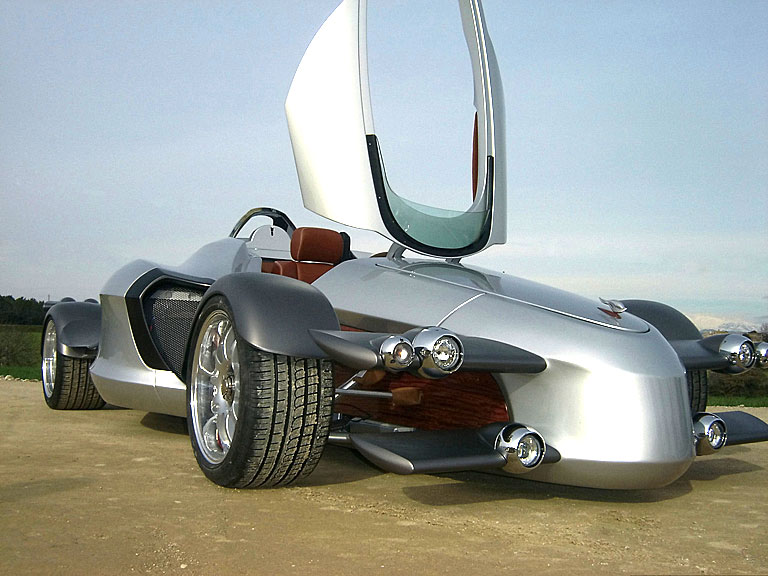
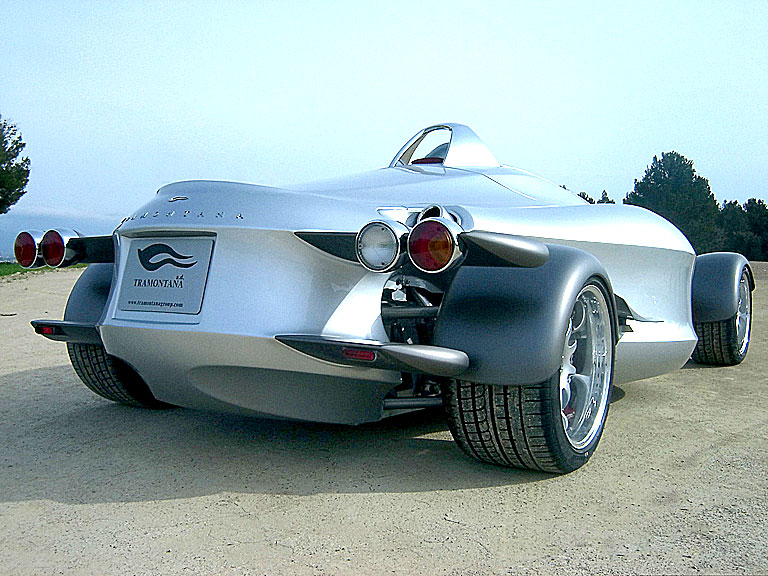
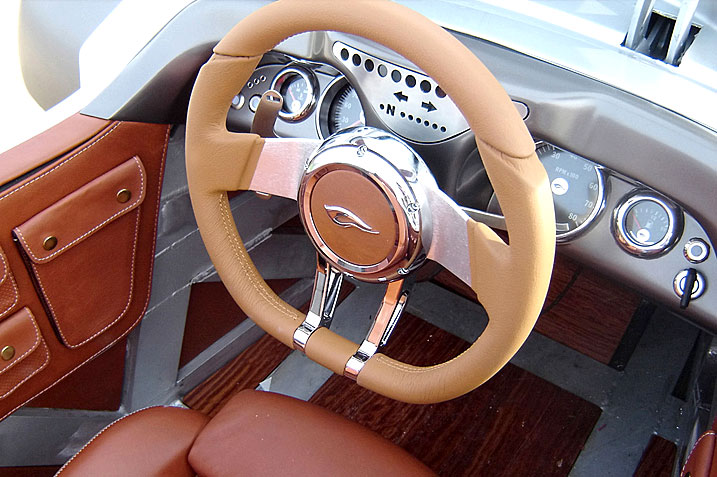
2006 Tramontana

At the beginning of the twentieth century, the Spanish automotive industry was created and a tradition of excellence and superior craftsmanship was born. Today, one hundred years later, a group of young engineers has developed a new automobile instilled with these same values. Building upon the foundations of these first concepts and designs, a.d. Tramontana has created a custom-made, hand-crafted vehicle that is distinguished by its unique character.

TramontanaTramontana 2Tramontana 3Tramontana 4
Specifications:

Engine :
V12 5.5 Litre
Weight : 2535 lbs
Aspiration : Twin turbocharged
Torque : 608 lb-ft
HP : 720 hp
HP/Weight : 3.52 lbs per hp
HP/Liter : 130.9 hp per litre
0-62 mph : 4 secs
Top Speed : over 186 mph

With a glance towards the past and a vision of the future, with passion, initiative and perseverance, a.d. Tramontana has reinvented the automotive industry in Spain and throughout the world.

a.d.Tramontana is a Catalan company that represents a new generation of entrepreneurial engineers. The company is located on the beautiful Costa Brava of North-eastern Spain, a place that has been a great source of creative inspiration. Their objective is to apply creativity to all aspects of the automotive manufacturing process. This creativity is evident in all aspects of the Tramontana: the design, the construction, and the exclusive distribution model.

The Tramontana embodies a revolutionary concept that incorporates the design qualities of the iconic Italian sports cars and the mechanical expertise of the classic British models.

a.d.Tramontana has brought together technical precision, personalized design, and superior craftsmanship using only the finest materials. In this way, the company can be considered as the heir to the iconic Spanish models of the beginning of the twentieth century. These cars, which marked a decisive moment in the history of the global automotive industry, have unfortunately disappeared, but the innovative spirit of their design lives on in the Tramontana.

The Tramontana is unique because its design combines visually stunning lines and personalized accents with powerful machinery and high safety standards.

The car is custom-designed and built according to the personal requirements of each client. This is done first by conducting an ergonomical study of the measurements of the driver, then by using the materials of his or her choice and, finally, by differentiating each unit with an engraving of a poetic verse in the chassis of the car. These characteristics assure that each Tramontana is a unique work of art modelled on the specific desires of the client.

Not only is the Tramontana visually attractive, it is also an extremely powerful piece of machinery, including a central V12 bi-turbo engine and over 500 horsepower. (MORE INFO about power here)

The Tramontana also adheres to high standards of safety. It includes a body of carbon fibre and a chassis that has been specially developed for this particular model and introduces a new structural system that combines an indeformable central zone with eight other zones of shock absorption. The body is made of carbon fibre.

a.d.Tramontana presented the original concept car at the Geneva Motor Show in 2005 as well
as at the Top Marques Monaco fair in the same year. Due to its incredible initial success among industry specialists, this year the company will present the final production model at the 2006 Geneva Motor Show, as well as at the Goodwood Festival of Speed in England, the Millionaire Fair in Moscow, and the Abu Dhabi Motor Show. In April, it will open its Technical Assembly Centre on La Costa Brava.

© Source: original article on seriouswheels.com

Add To Favorites

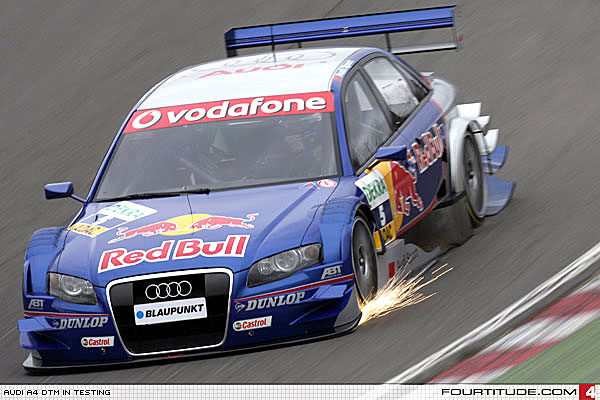
Tests in the DTM - Every Day Counts

- Audi Teams test at Brands Hatch
- 20 days until the start of the 2006 DTM

audi a4 Tom Kristensen did not have a lot of time for a proper celebration of the Audi R10 TDI’s historic victory in the 12-hour race at Sebring (USA): As early as on Sunday the Audi works driver flew back to Europe from Miami in order to participate in the official DTM tests at Brands Hatch (England).

The four-day test at the former British Grand Prix circuit on the outskirts of London in which all nine Audi DTM factory drivers are taking part is an important component of the preparations for the new DTM season scheduled to start on April 9th because, for cost reasons, tests in the most popular international touring car series are subject to strict limitations.
In winter, the manufacturers are permitted merely ten exclusive days of testing at race tracks approved either by the FIA or a national association. During the season, the number of tests permitted is reduced to as few as eight for two cars each. For the Audi drivers, this means that – except for the race weekends – they seldom have the chance to take the wheel of an Audi A4 DTM.

Consequently, the official DTM tests at Brands Hatch scheduled from Monday to Thursday this weeks are particularly important: They are not deducted from the number of tests allotted to each manufacturer and offer the drivers the last true opportunity to familiarise themselves with their new competition cars prior to the start of the season.

© Source: original article on fourtitude.com

Add To Favorites

3/21/2006

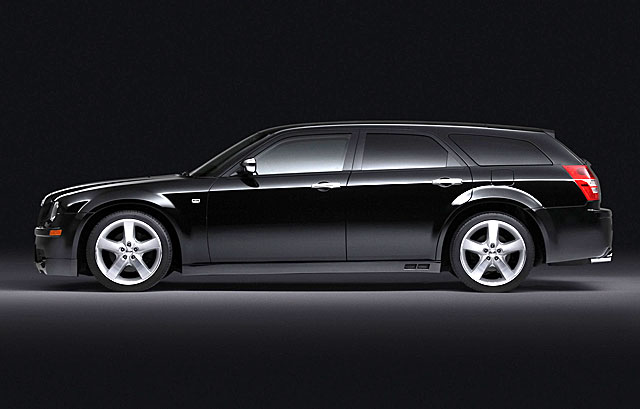
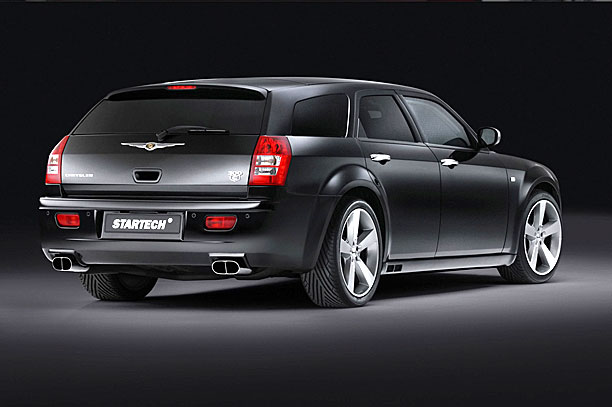
2006 STARTECH Chrysler 300C

The Chrysler 300C - regardless of body style, 300C Sedan or Touring model - sets itself apart from the rest with striking design. STARTECH offers an extensive customization program for the top-of the-line Chrysler.

2006 Chrysler 300C2006 Chrysler 300C 22006 Chrysler 300C 32006 Chrysler 300C 4 For the Chrysler 300C 3.0 CRD STARTECH offers its SD6 performance tuning that does not impede the function of the standard diesel particulate filter. The STARTECH tuning kit consists of a computer-controlled auxiliary control unit complete with wire harness and installation instructions. It can be installed in less than 30 minutes by any authorized Chrysler dealer.

The new engine mapping increases power output of the 3.0-liter V6 common-rail turbodiesel engine from standard 218 hp / 160 kW to 262 hp / 193 kW at 4,000 rpm. Even more important in everyday driving is the jump in peak torque from standard 510 Nm to 580 Nm, available between a low 1,600 and 2,800 rpm.
These impressive figures are also reflected in the performance of the Chrysler 300C 3.0 CRD. The sprint from rest to 100 km/h is shortened from 7.6 (Touring: 7.9) seconds for the production car to 7.2 (Touring: 7.5) seconds with STARTECH SD6 tuning. Top speed increases to 235 (Touring: 232) km/h.

STARTECH recommends the addition of its stainless-steel sport exhaust system as the perfect complement to the performance tuning. The sport exhaust features the two characteristic oval STARTECH chrome tailpipes and not only produces a more powerful yet unobtrusive exhaust note but also optimizes power yield.

The extensive STARTECH individualization program for the 300C is also available for the new common-rail model. The STARTECH aerodynamic-enhancement kit lends both body styles an even more striking appearance.

The front of the top-of-the-line Chrysler model receives an attractive facelift with the STARTECH chrome grille with matrix design and the STARTECH front spoiler. The spoiler is attached to the production bumper and has more than just cosmetic effects: Its refined shape reduces aerodynamic lift with benefits for directional stability at high speeds. The elegantly shaped STARTECH side sills offer an interesting feature: Upon activation via the keyless-entry remote or by pulling on a door handle four LED-lights on either side illuminate the ground next to the vehicle.

The STARTECH roof spoiler visually extends the roofline of the sedan. The STARTECH rear spoiler lip on the trunk lid reduces lift on the rear axle at high speeds. For optimal integration of the two oval tailpipes of the STARTECH stainless-steel exhaust system the designers created custom-tailored elements for the rear apron.

Another important contribution to the exclusive STARTECH design is made by the 20-inch wheels and by the vehicle’s lowered ride height. The one-piece STARTECH Monostar IV 9Jx20 light-alloy wheels with sporty yet elegant five-spoke design are fitted with tires in size 245/40 ZR 20 in front and in size 275/35 ZR 20 on the rear axle.

The STARTECH sport springs lower the ride height of the 300C 3.0 CRD by some 40 millimeters and are precision-calibrated to the production shock absorbers to combine more agile handling with excellent ride comfort.

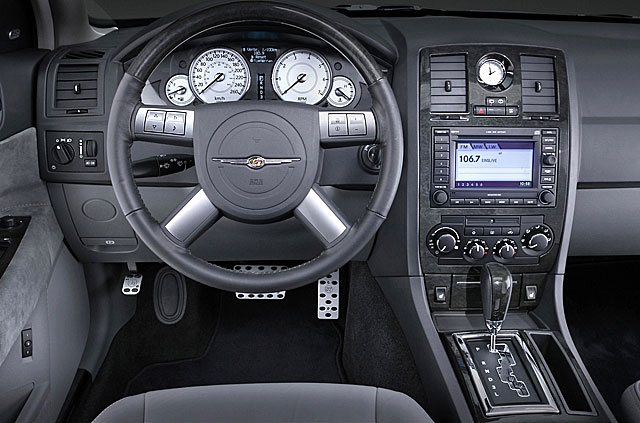
Sill plates with illuminated STARTECH logo, high-quality additions to the wood trim, Alcantara door panel elements and armrests, or aluminum shifter, foot pedals and chromed door-lock pins - the refinement of 300C interior plays an important role at STARTECH.

The STARTECH upholstery shop fulfills even more exclusive requests from individual customers. Among the specialties are precision-crafted fully leather interiors made from especially soft and breathable Mastik leather and Alcantara as well as the state-of-the-art STARTECH multimedia package. The in-car entertainment system comprises a custom-tailored roof console with retractable 10.2-inch screen and an integrated DVD player. The sound is transmitted by two wireless infrared headphones.

© Source: original article on seriouswheels.com

Add To Favorites

Good Start for the Audi R10 TDI at Sebring

- Fastest lap during the first official practice
- Allan McNish sets fastest time at Sebring
- Record crowd of 150,000 spectators expected


audi r10 Audi has managed a perfect start in this year’s American Le Mans Series (ALMS). During the first official practice day for the season opener at Sebring, the two 650 hp diesel sportscars set the fastest laps on the 5.954 kilometre circuit. The fastest time of the day was set by Audi driver Allan McNish in the #2 Audi R10 TDI during the morning session.

The starting grid for the 12-hour race will be decided in qualifying on Thursday. The organisers expect another record crowd of over 150,000 spectators during the weekend at the traditional season opener in the US state of Florida. The long-distance classic is the most important sportscar race in the USA and for Audi, the dress rehearsal for the 24 Hours of Le Mans where Audi bids to become the first manufacturer to claim overall victory with a diesel sportscar.

Quotes after the first practice day at Sebring

Dr Wolfgang Ullrich (Head of Audi Motorsport): "Like always it’s very difficult to adapt a new car to a tricky circuit like Sebring. We’ve been here for testing but due to the higher ambient temperatures, we now have completely different circumstances. The team is working towards the race set-up for both cars and is making good progress.”

Frank Biela (Audi R10 TDI #1): "We sorted out a few things during testing so that we arrived at Sebring with a good car. Now we have to adapt the Audi R10 TDI to the current conditions and have to deal with circumstances like changing wind direction and force for example. Reacting to these elements was of course much easier with our well known Audi R8. But after the experiences so far, I’m quite optimistic that we will ultimately manage the same with the R10 TDI.”

Emanuele Pirro (Audi R10 TDI #1): "It has been a good start. We have discovered a lot more things about the car and are satisfied with the steps we’ve already made. I’m happy about the positive feedback our diesel project is experiencing in the USA. A lot of enthusiastic fans talked to me and said they couldn’t believe that a diesel can be so fast.”

Marco Werner (Audi R10 TDI #1): "We are very satisfied because now we know that our car is competitive. The encouraging thing is that we have not suffered the slightest problem with our R10 TDI and so was able to work on our programme without interruption.”

Dindo Capello (Audi R10 TDI #2):
"It’s nice to get back into the cockpit of a race car after such a long time of preparation. With the heavy traffic of the slower ALMS classes on the circuit, I feel at home already. We are still improving our R10 TDI and I’m now looking forward to the qualifying.”

Tom Kristensen (Audi R10 TDI #2): "I was looking forward very much to driving the new Audi R10 TDI with diesel power for the first time here at Sebring on Monday and it didn’t disappoint me. Our new ‘baby’ has excellent power and extremely good aerodynamics. So the guys in Ingolstadt and Neckarsulm managed once again to put something very special on four wheels.”

Allan McNish (Audi R10 TDI #2): "Every day we learn more about our car. And now we already know how competitive we are. Our lap times look very good and we are definitely working in the right direction and so will have a well prepared car for the race on Saturday.”

Ralf Jettner (Technical Director, Team Audi Sport North America): "We have worked through our programme without any problems so far. But we also learned that the competition will be very hard here at Sebring. Our competitors Porsche and Dyson are very fast so we can expect a very tough race.”

© Source: original article on fourtitude.com

Add To Favorites

3/18/2006

Project B7 A4 2.0T: Introduction

Now in its third generation, the A4 has established itself as a major player in entry-level luxury cars. The A4 range is the most popular sales category for Audi, and the A4 2.0T is a relatively affordable and very capable entry-level offering. With all of this in mind, we believed it time to launch another project car series – Project B7 A4 2.0T.

audi a4audi a4 2audi a4 3 Better yet, we thought it perhaps a timely move to team up with a well-known contributor to various Audi forums. Zerin Dube is not new to Audis, having built a pretty spectacular B5 S4. Zerin recently acquired a B7 and we were certain he’d do things that were just as impressive, if not moreso, with this new red sedan.

Working together with Zerin, Fourtitude plans to explore the burgeoning new market out there now for the B7 A4 and the 2.0T engine. The B7 may appear similar to the B6, but many components such as suspension have been changed. This project will help put a spotlight on products for this new generation A4, and try some new modifications that haven’t yet been done before.

Look for regular updates on our new Project B7 A4 2.0T regularly on the site, and expect to see the red sedan in the Fourtitude booth at some shows this summer, or on display at other events where Fourtitude is not there in an official capacity. For now, we’ll hand the pen over to Zerin so that he can introduce himself…

Audi Background: Zerin Dube

I first fell in love with the Audi brand in 1999 when I saw an ad for the then new Audi S4. The ad depicted a yellow S4 in motion amidst a blurred background. From that very moment, the Audi S4 became my realistic dream car. It had everything I ever wanted in a car…lots of power, great looks, impressive handling and the convenience of a four-door. On top of that, the car had the tuning potential to be converted from a mild-mannered Dr. Jekyll sports sedan to an Mr. Hyde-like high-horsepower monster - all the while retaining its benign appearance.

A year later, a yellow S4 happened to be parked on a pedestal in front of my local Audi dealer as I drove by it on the freeway. Seeing it there in person, I lost any ability to think rationally, exited the freeway and went to the dealer to check out the car that I had lusted over since I first laid eyes on it in that ad. A few hours later, in what was probably the biggest impulse buy of my life, I left the dealership the proud new owner of that yellow S4. My dream had come true, and my love affair with the Audi brand had begun.

A friend of mine at the time asked me what I had planned as far as modifications. I looked at him as if he was crazy and said “I just spent $40,000 on a car, no way I’m ever doing a single modification to this car.” Of course, like many of us who bought the B5 S4, the story hardly ended there. Two years later, my S4 was pumping out 400+ horsepower, had 1200 watts of audio gear, and had even landed on the pages of a few tuner magazines.

I regrettably had to sell that S4 in 2002 when the IT market started to tumble, and I felt like I was losing a part of me. It’s not the car that made me who I was, but it was the emotion I felt when I looked at it and drove it. No other car came close to the visceral rush the S4 gave me when behind the wheel. I vowed that I would own another Audi again, and try to pick up where I left off with the S4. I just didn’t know when that would be.

Then it hit me. I spotted it in the Audi stand while attending the 2005 Detroit Auto Show. There, on display, was a red 2005.5 B7 Audi A4. This was the first time I had seen one in person, and it was quite simply love at first sight. The car had grown up since the B6; the aggressiveness and edginess of the B5 had returned.

The 2.0-liter Turbo FSI powerplant I had read so many good things about was equally as enticing. The B7 A4 had the same traits that made me fall in love with the B5 S4: plenty of power, great looks, great handling, and most importantly, great potential. The car was just perfect in almost every way. It was at that very moment that I decided I had to have one.

I took delivery of my first B7 A4 2.0T Quattro in early April of 2005. I felt right at home in the familiar interior of the A4. It drove beautifully, the engine was phenomenal, and the design was stunning. It was almost as if the car was saying to me “Welcome Back.” There was just one problem though, and a pretty big one at that…the color.

When I had my dealer locate a car based on the options I wanted, the only car they could come up with was silver. Silver was the absolute last color I wanted to buy, and would have preferred almost anything else over silver…but it was all that was available at the time in my region. I had no time to wait on other colors to become available, as I had a buyer flying into town the very next week to buy my previous car, a VW GTI. I sucked it up, tried to convince myself silver was what I wanted, and bought the A4 from Millennium Audi in Houston.

Over the next few days, I started to visualize my modification plans. I knew what I wanted to achieve, but had to figure out exactly how I was going to achieve it. The color of the car again became a problem. I just could not get excited about silver. Honestly, the car looked great, but the color just was not anything to turn heads with. I started to have a bout of buyer’s remorse when I got a call that would change my entire attitude about the project.

One of the other dealers in Houston was forced to return inventory to port, and a Brilliant Red A4 2.0T with all the options I wanted had become available. Better yet, Millennium Audi made my situation that much easier, allowing me to switch out of the silver car and into the red one for no other cost than the additional cost of options in the red one. I was now the proud owner of a Brilliant Red A4 2.0T quattro 6-speed with sport package, premium package, BOSE, and lighting packages. Now I felt complete. I had a color I wanted all along, and a car I was totally in love with for the first time since selling my S4. I was finally ready to start Project B7 A4 2.0T, and ready to start big.

The Plan

My philosophy of modifying a car differs from some enthusiasts. I value practicality over insanity and subtlety over in-your-face attention-getting looks. I also look at the big picture from start to finish when building a car.

All parts, no matter how small, will have an impact on the end result. All parts and changes have to be cohesive, well engineered and well thought out. I will not sacrifice daily drivability for performance. I will not sacrifice quality for cost savings. I will not put anything on the car that has a detrimental effect on anything, just because it “looks cool” or makes “cool noises”. I will not put parts on the car just to make my modification list longer. All aesthetic modifications have to be in good taste, and should be of OEM-quality fitment. That is my philosophy, and it follows the “keep it simple” mentality. Simple doesn’t have to mean boring, and my Project B7 A4 2.0T will reflect that.

The project will be primarily focused on performance, but will also highlight electronics integration and visual enhancements. I’ll begin byfocusing on how simple computer tuning can transform the stock 2.0T B7 A4 into a car that feels as if it had twice as many cylinders and then look at the difference a properly set-up suspension can make on a car, versus slapping in some off-the-shelf struts and springs . I’m planning subtle design changes that, when combined together, change the entire look of the car. Hopefully, I’ll do all of this on a budget, without sacrificing practicality or reliability. This should be a project car that everyone will be able to relate to.

© Source: original article on fourtitude.com

Add To Favorites

2006 Renault Altica Concept

Altica is a sporty estate that combines flowing lines with a spacious interior. Its dynamic stance is underpinned by a long bonnet and curved forms, while its modular interior ensures outstanding load capacity.

2006 renault altica2006 renault altica 22006 renault altica 32006 renault altica 42006 renault altica 5 Altica stands out as a dynamic vision of the estate, combining the practicality of the latter, the sports appeal of a coupй and a high standard of travelling

Flowing, sporty lines

The panoramic windscreen and rear window underline the car’s fluid aerodynamics. The two-tone paintwork accentuates the side design and also asserts Altica’s graphic identity. The car’s overall stance – low-slung lines, long bonnet, prominent wings – and proportions express true sports car dynamics. Comprised of a mosaic of transparent panes, the rear quarter lights suggest forward movement.

Altica’s interior mirrors its sporty, dynamic exterior design. The suspended drive station is held in place by four profiled rods that hint at the world of Formula 1.
The transparent roof and panoramic windscreen erase the boundary between the interior and the outside world and also ensure a brightly-lit cabin. The mosaic design of the rear quarter lights allows sunlight to filter into the cabin much like it does through stained glass windows and gives the interior a more welcoming feel. The layout and angling of the panes ensure good three-quarter rear visibility for the driver which is indispensable when parking.

The headlamps feature four different modes – daytime running lights (DRL), sidelights, dipped beam and main beam – and function using rows of diodes. They also produce a halo effect when the DRL mode is selected. This is achieved in two ways. First of all, each polycarbonate headlamp module cover is speckled with thousands of small, micro-engraved nicks.
Invisible to the naked eye, these nicks have no effect on the beams and permit light to pass unhindered. In the daytime running mode, however, the surface of the module cover is illuminated from the edge. The light is accordingly trapped inside the mass and spreads out like a fluid over the entire surface to produce an original and effective halo effect for the DRL and sidelight functions.

An estate with the accent on practicality

Altica’s sports pedigree is reinforced by its scissor doors, the form of which ensures easy access to this low vehicle. The generous interior volumes of Altica provide a very high standard of travelling comfort despite the car’s sporty characteristics. Each of the four individual seats boasts outstanding comfort.

Instead of the seats, which are fixed, it is the drive station and pedal assembly that adjust to match the driver’s physique thanks to a motorized mechanism.
The height-adjustable centre armrest deploys automatically as the driver sits down.
The vertical positioning of the dashboard takes its inspiration from the world of aeronautics and permits the driver to feel at one with the car.

The centrally-positioned dial features two display modes: “comfort” and “sport”. The “comfort” mode
indicates the car’s speed in the centre of the display while the perimeter shows the legal speed limits
which turn red if exceeded. In the “sport” mode, the speed continues to be displayed in the middle of the dial but the perimeter becomes a digital rev counter and turbo pressure indicator. The graphics of the high-resolution screen provide a distinctly human touch to this high-tech display which itself suggests watchmaker-like precision and sophistication.

Driving pleasure, power and control

Altica is a dynamic sporty estate that combines driving pleasure with a sensation of power and control. With its long bonnet, sports dimensions (length: 4.27m; width: 1.83m) and very low centre of gravity, Altica offers remarkable performance. Altica’s new 177hp 2.0 dCi particulate filterequipped diesel engine takes the car from a standing start to 100kph in just 7.5s.

Coupled with a six-speed Altica features a number of clever storage spaces, including the shell-like glove box, concertina-style storage compartment in the armrests and a tray situated underneath the floor at the rear. The rear seat backs can be folded into the flat floor which is equipped with straps that permit heavy or bulky loads to be held secure. This layout transforms Altica into a two-seater sports coupй with a vast 1,300-litre boot, while the boot lid provides very easy access and an extremely low loading sill. Altica’s low fuel consumption also stems from its exceptional aerodynamics.

Located at the extremity of the roof at the point where the vehicle and the passing air flow separate, a discreet mechanical system generates jets of air which are alternately blown and sucked through a 2mm wide slit. Known as “Synthetic Jet”, the system actively controls the separation of the air flow
according to the vehicle’s speed. This innovative technique, which reduces drag and controls the structure of the air flow, is a registered Renault patent and reduces the car’s Cd at 130kph by 15% for an energy consumption of just 10 Watts. gearbox, this powerplant – which boasts maximum torque of 380Nm – provides excellent pull-away and mid-range acceleration. This hasn’t been achieved
to the detriment of fuel consumption, however. The Renault-Nissan Alliance engine is very inexpensive to run and fuel consumption is equivalent to 140g of CO2 per kilometre. In terms of both performance and driving pleasure, it stands out as the best diesel engine in its class.

Valeo

Altica’s lights employ high-performance light emitting diodes (LEDs). The dipped and main beam functions are housed in a single module which tops a linear directional light. The LED control unit permanently adapts the quantity and orientation of the beam as a function of the conditions. During motorway driving, the LEDs that ensure long range visibility are automatically activated and controlled to guarantee optimum visibility at all times without dazzle. The colour of the light emitted by the LEDs is similar to that of daylight for enhanced optical comfort and visibility.

The daytime running light (DRL) mode, which is activated most of the time while the car is moving, also use LEDs. Their high efficiency and the low amount of energy they require significantly reduce the power that is consumed compared with a conventional light source. The life expectancy of LEDs is also much longer than that of all contemporary light sources. As a world first, the sidelight function is ensured by a veil of light that covers the entire headlamp thanks to Valeo’s exclusive MicroOptique technology.

TECHNICAL CHARACTERISTICS

Dimensions
Overall length 4,270mm
Width (excluding door mirrors) 1,830mm
Height 1,360mm
Wheelbase 2,620mm
Front and rear track 1,540mm
Front overhang 936mm
Rear overhang 714mm
Ground clearance 175mm
Weight 1,300kg

Powertrain
Four-cylinder 2.0-litre 16-valve turbocharged Euro 4-compliant dCi diesel engine with balancer shafts
and particulate filter.
Power: 130kW / 177hp and maximum torque of 380Nm at 2,000rpm
Standing start to 100kph in 7.5 seconds
Maximum CO2 emissions:140g/km, for a standard cycle fuel consumption of 5.3l/100km
Six-speed manual gearbox

Transmission
Front-wheel drive, front,
transverse-mounted engine
21-inch wheels 245 / 35 - ZR21 tyres

Partners
Valeo Exclusive MicroOptique technology: micro-engraved module cover for the daylight running light (DRL) and sidelight functions
Lighting and signal functions using high-performance LEDs
Michelin Pilot Sport 2 tyres
Montupet Specifalloy wheels ic light

Exterior equipment

• Active Synthetic Jet system located at the rear edge of the roof reduces drag at 130kph by 15%
• Two scissor doors activated by optical sensors
• Panoramic windscreen and transparent roof
• Mosaic rear quarter lights optimize 3/4 rear visibility
• Wide boot lid opening and very low loading sill (located 450mm from the ground)

Interior equipment

• Four independent seats; the two rear seats can be folded down to obtain a boot storage volume of up to 1,300 litres
• Drive station suspended by four rods
• Motorized adjustment of pedal assembly and steering wheel positions
• The steering wheel and pedal assembly move automatically clear when the door opens; automatically deploying centre armrest
• Analogue and digital centrally-positioned instrument with two display modes: “sport” and “comfort”
• Additional storage space underneath the rear parcel shelf of the boot floo

© Source: original article on seriouswheels.com

Add To Favorites

3/17/2006

STaSIS Engineering to Campaign Three Cars in 2006

STaSIS Engineering has announced that they will campaign three Audi A4 racecars for all 10 rounds of the 2006 SCCA Pro Racing SPEED World Challenge Touring Car Championship.

a4 racecara4 racecar 2Coming off a season-ending win at Mazda Raceway Laguna Seca in 2005, STaSIS representatives said that the team's 2006 goals are championship driven, with three cars in its lineup for the entire year, plus having great confidence in its equipment and abilities.

The STaSIS driver lineup includes Fast Freddy Baker returning to again compete in the Audi A4. Baker who has a 70% podium rate in various series from Trans Am to World Challenge is sure to make the year exciting. Alongside Baker will be rookie, Jeff Courtney of Slinger, WI. Courtney recently won the 2005 championship in the Panoz Racing series. STaSIS' third driver will be announced shortly.

“The level of competition will be strong, and we have stepped up our program in every way to ensure that we are contenders for the top spot on the podium,” STaSIS Owner Paul Lambert said. “We have added new, talented crew members to the fold, building on our team from last year. Aiding in our quest for success, our technical partners, Mahle Powertrain (formerly Cosworth Technologies), Alcon and Ohlins are all on board again with us. We are anticipating a great season in 2006.”

“We are extremely pleased with our driver lineup for the up coming 2006 season,” commented Team Manager Ben Bauer. “Freddy is a very important part of our plans for a successful 2006 campaign, his statistics speak for themselves. Out of 299 races, Freddy has 146 wins, 36 second places and 28 third places. He has competed with and beat some of the biggest names in racing, such as Peter Cunningham, Michael Galati and Bobby Archer. Additionally, we are excited about the addition of Jeff Courtney to the team; he tested very well in our cars and has built an impressive record in a very short time”

STaSIS will begin the 2006 SPEED World Challenge Touring Car season March 15-17 at Sebring International Raceway, where the team will run a new Audi A4 alongside two other Audi A4's that ran last season at both Sebring and St. Petersburg .

Those two previously-run cars will be replaced at the May 19-21 Mid-Ohio Sports Car Course event, where STaSIS will debut two 2006 Audi A4 racecars. All STaSIS cars will be powered by the Mahle 1.8T engine that powered their race win at Laguna Seca in 2005.

About STaSIS Engineering

STaSIS Engineering provides SPEED World Challenge Touring Car race program developed products for selected Audi, Porsche, BMW, Lotus, Subaru, Volkswagen and Mitsubishi models. We have partnered with world leaders in braking, suspension and engine products to develop the most advanced products for an enthusiast's car. At STaSIS Engineering we engineer our products to work together, combining to create an ideal balance of day-to-day drivability and unrivaled performance for customer's automobiles. Since 2001 our products have been well fitted together like the pieces of a puzzle. Our goal is to help enthusiasts transform their daily driver into one of the highest performing vehicles on the road.

© Source: original article on fourtitude.com

Add To Favorites

2006 Inovo Design Lirica Concept

Inovo Design makes its debut appearance at the Geneva Motor Show where it will unveil its new coupe concept. As its name suggests, Lirica is a classically-inspired automobile, but one interpreted in a very contemporary key, and outfitted with an innovative driver-automobile interface.

2006 Inovo Design Lirica Concept2006 Inovo Design Lirica Concept 22006 Inovo Design Lirica Concept 32006 Inovo Design Lirica Concept 42006 Inovo Design Lirica Concept 5

The project philosophy

“An eighteenth century villa with ultramodern decor and cutting edge technology.” This is how Maurizio Ficcadenti, president of Inovo Design, sums up the spirit of Lirica, whose name comes from the Greek word indicating song with musical accompaniment. “We seek to express an artistic message through the technological instrument of the computer,” explains Ficcadenti.

Lyric opera is one of the crowing expressions of Italian tradition in the world. The Inovo Design project pays homage to Italian aesthetics and artistic taste in this concept coupe, which recapitulates and communicates the company’s professional experience.

Lirica is Inovo Design’s four-wheeled business card. The firm offers full spectrum consulting services in automobile and product design, from the initial concept, to research, project development, and prototyping.

A number of years ago, Inovo Design chose to step beyond the ‘material barrier’ and completely eliminate hardcopy design in favor of the most advanced computer design systems. This meant savings in terms of costs and time, but no corners were cut on the value of the creative content.

The result is Lirica, a show car designed in just 8 weeks.

External design

A large coupe—almost 5 meters long with a wheelbase of over 3 meters—Lirica honors the tradition of the luxury Gran Turismo sedan. The style and proportions evoke high end Italian sports cars of the past while avoiding any retro nostalgia. A balanced composition of broad surfaces, a body characterized by a few strong features, and minimum chrome and embellishments create a sober and extremely contemporary automobile.

The Lirica power train is based on an in-line front motor (a 90° V8), rear wheel drive, and a rear transaxle.

The front end has a large air intake surmounted by extremely technical headlamps. The front end composition complies with standards to protect pedestrians in the event of an impact.

From the side you notice the base of the windshield placed behind the front axle, the high belt line, and a muscular rear fender. As a romantic touch, the air outlet is mounted on the front fender immediately behind the wheel, but interpreted in a modern, evocative key.

The sides and roof line converge at the rear into a beautifully soft and tapered form to create a very harmonious rear end that does not cramp the comfort of rear seat passengers.

Internal design

The forms and fittings of the four seat passenger compartment recreate the atmosphere of the contemporary Italian salon. The style is minimalist and high quality throughout, as exemplified by the Alcantara upholstery and aluminum inserts.

The design of Lirica revolves around new behavioral models. New multi-sensorial interfaces have been developed between occupant and car. Habitability of the interior space is optimized along with interaction with the world outside the car.

Traditional ergonomics concepts have been rethought, which has resulted in much of the instrumentation being moved from the physical into the virtual world, centered on a computer screen which unites a broad range of functions. The traditional monolithic dashboard concept has thus disappeared, replaced by a multi-component instrument panel. The controls and main driver information are centered on the steering wheel, while the central dashboard area is dominated by a large multifunctional display. A joystick gives passengers access to Lirica’s technological attributes.

Onboard technology

The onboard communications interface comprises:

- A screen on the steering wheel for driver information;
- A 10” screen for office purposes and satellite navigation;
- 3 screens (one for each passenger, rear passenger screens are mounted in the seat backs) for DVDs, games, or Internet navigation.

The 10” TFT (4:3) high luminosity Touch Screen is controlled by a high performance computer specifically engineered for installation in vehicles. The operating system is Windows XP Professional with Wi-Fi Internet connection. Passengers have access to all the normal applications and functions (Power Point, Video, etc.) running under WinXP PRO.

The monitor is also the main interface for the Pocket Driver Itinera satellite navigation system.

© Source: original article on seriouswheels.com

Add To Favorites

3/16/2006

Green Ford Focus Fills Up At First Bio-Ethanol Fuel Pumps

When bio-ethanol first went on public sale this morning, the Ford Focus Flexible Fuel Vehicle was front of the queue to be refueled.

green ford focusgreen ford focus 2 The Ford Focus Flexible Fuel Vehicle (FFV) is Britain's first bio-fuel car and can run on bio-ethanol or petrol in any mix in the same fuel tank. Bio-ethanol is a renewable fuel, on sale this month at 10 Morrisons supermarkets and priced cheaper than unleaded petrol from 84.9p a liter.

Five of the forecourts selling bio-ethanol are in Somerset, where Ford has sold the most Focus FFVs. The remainder are in East Anglia – three in Norfolk and two in Suffolk. Somerset and Norfolk are two of the counties where Ford is working with regional bio-fuel groups to establish FFV sales and bio-ethanol filling stations.

Andy Taylor, Ford's European sustainability director, said: "This is an important breakthrough for the Ford Focus FFV and the bio-fuel industry. Ford has been working with partners such as Morrisons for a year to make bio-ethanol publicly available. Together we have taken a vital next step towards encouraging more customers to consider buying Ford's bio-fuel cars."

The 1.8-liter Ford Focus FFV costs from Ј14,095 ($24,700 USD approx.), in between the petrol-only 1.6 and 2.0-liter Focus models. CO2 emissions from bio-ethanol are almost cancelled out by the CO2 absorbed by the crops such as wheat and sugar beet used to make the sustainable fuel.

Source: © http://www.theautochannel.com/news/2006/03/16/000731.html

Add To Favorites

3/11/2006

2006 Loremo LS Concept

Bavaria is well-known for its innovative car-makers and Loremo AG is the newest of this breed. The company was founded in 2000 by Gerhard Heilmaier, Stefan Ruetz and Uli Sommer and is planning to introduce a small series of the first 1,5 liter (157 mpg) 2 + 2 seater onto the roads.

2006 Loremo LS Concept2006 Loremo LS Concept 22006 Loremo LS Concept 3The Loremo is a lightweight vehicle whose development has taken a radical new direction: less is more and the most efficient use of energy is not to use it at all.

From this motive new ideas sprang which gradually made it into the design. Even the name Loremo – Low Resistance Mobile – speaks of its streamlining and economy.

The Loremo’s construction handbook would make an excellent diet recipe. Slim lines and no unnecessary ballast distinguishes the Loremo from all other cars. Its superior safety concept, excellent aerodynamic characteristics, revolutionary bodywork, the linear cell structure, and a radically new rear-axle keep it in form. It combines the economy of a compact car with the handling and feelings of a sports car. The Loremo LS – light and simple is a car which awakens emotions and yearns for sinuous roads.

Bodywork and chassis concept

The 95kg (209 lb) lightweight steel chassis – a patented linear cell structure – is one of Loremo’s key elements. It performs well-above average in crash simulations and provides excellent handling characteristics with its low center of gravity and torsional stiffness. Longitudinal supports, extend
at fender height along the length of the entire vehicle, increase stability and ensure that the linear cell structure remains practically undamaged in offset and side crash-tests. The centrally mounted cross-support, on which the roll bars are mounted, stiffens the longitudinal beams and houses the engine.

The non-load-bearing, self-supporting, thermoplastic body panels mould to the linear cell structure and help the Loremo to achieve its aerodynamic shape. This material has a number of advantages: it is light weight, weatherproof, scratch-resistant and it is economical. It substitutes the classical
paint by a thin film, in the color of the car, during the manufacturing process.
In this way the Loremo receives a high-quality, paint-like surface without environmental damaging paints.

The intelligent, chassis air-guiding system is perfected with the help of lower tire fins and by the air stream optimized chassis design. The Loremo achieves its optimum driving characteristics with its minimized wind resistance and reduced buoyancy.

Design

Not only is the energy efficiency reflected in the dynamic, elegant lines of the Loremo but also in its sporting nature. The distinctive, powerful front stretches softly into the extended rear. There is no B-pillar as the panorama roof has no load-bearing function and is simply bolted to the roll-bar.
The nose close to the street does away with a monstrous radiator grill and instead an opening provides access to the aerodynamic underside.
The LED headlamps give the vehicle both a distinctive look as well as exhibiting tomorrow’s display technology.
Unusually the car is entered from the front for which the entire hood of the car including the windshield is tipped forwards, allowing for upright boarding to the interior. The opened front shows the trunk, which also provides additional 600 mm (24 in) of crumple zone. The vertically-opening tailgate provides the entry to the back seats.

Interior

2006 Loremo LS Concept 4The Janusseater - two seats are in front of the pyramidal cross-support and two rear-facing behind it - is equipped with super-light ergonomic seats.

The seats, embedded in the linear cell structure, create a feeling of sporty security and comfort. There is plenty of room for sporting equipment or for additional suitcases, if the rear-facing seats are not with passengers.

The spartan, sporty interior design does away with unnecessary fittings and its two-ply plastic construction doesn’t need any additional finishing.

High-quality interior furnishing in alcantara and high-tech fabrics provides spacious luxury and comfort. If required the Loremo LS can be equipped with a simple air-conditioning system, an on-board PC with navigation system, an mp3 player, and a driver information system.

Technology

Of particular note is the rear differential-link axle, specially-developed for the Loremo, which combines the advantages of longitudinal- and semi-trailing link axles. With maximum load, the axle is indifferent to toe and camber at full suspension compression. In curves, however, the wheel leans inwards to achieve better lateral traction.

An optimal load distribution of 50:50 is achieved by placing the motor centrally and 105/70 R14 low-profile tires give good road holding and perfect straight-line driving.

The 20 PS (15 kw) two-cylinder turbo-diesel motor powers the 450 kg (204 lb) light Loremo LS to up to 160 km/h (100 mph). It accelerates from 0 to 100 km/h (63 mph) in 20 s and its aerodynamic form achieves a Cw value of 0.20.

Fuel consumption: tiny 1.5 liters for 100 km (157 mpg)! Thus the Loremo can travel from Munich to Rome (over 800 miles) on only one 20 liter (5 gallon) tank of fuel. At only 384 cm (151 in) long, 136 cm (62 in) wide, Loremo AG has developed a true small car. In driving fun the 110 cm (43 in) flat, economical sports car easily runs against the large competitors.

Those who want more should look forward to the Loremo GT. With 50 PS (37 kw) and a 3-cylinder turbo-diesel motor it reaches a top speed of 220 km/hr (138 mph). And with 2.7 liter for 100 km (88 mpg) it is still very fuel-efficient.

The price will be under 15.000.- E

“At the moment”, points out Gerhard Heilmaier, president of Loremo AG, “the Loremo LS is primarily an energy-saving, minimalistic body concept. It is an innovation which leaves room for continual development and many variations in both, its design and engine. It will certainly influence the
automobile future”.
© Source link on seriouswheels.com

Add To Favorites

2007 Mercedes Benz E-Class: Spy photos

mercedes benz emercedes benz e 2mercedes benz e 3mercedes benz e 4Caught during the filming of a commercial, these are the first shots of the 2007 Mercedes Benz E-Class. It doesn't look much different because it isn't. Only minor changes to the front air dam and rear fascia are noticeable. The real upgrades will come under the hood as the E500 will become the E550 with the addition of Mercedes' new 5.5-liter V8. The base E350 will continue as before. Mercedes is hoping to add the E320 Bluetec diesel to the lineup in all 50 states, but final approval has not been secured yet.
© Source link on blogs.edmunds.com

Add To Favorites

Mini Fighter: Audi's new A2 to be radically different from previous model

The new A2 will be based on the Volkswagen Polo and look similar to the Shooting Brake concept, above, seen at Tokyo in 2005.

audi a2 Audi will launch a radically different A2 successor by 2008. The car will be aimed directly at BMW's Mini.

"When we look at this segment it is clear there are a lot of customers who want a car below the A3," Audi Chairman Martin Winterkorn said in an interview at the Geneva auto show. "Mini has done well with its car. It has become more and more apparent there is demand there."

Audi sources said the next-generation steel-body A2 will arrive by 2008 and will be based on the front-wheel-drive Volkswagen Polo small car. The A2 may offer all-wheel drive. Winterkorn said the A2 will closely resemble the Shooting Brake concept shown last autumn at the Tokyo auto show.

The new A2 will have "that kind of style," Winterkorn said. "More emotion, more sportiness. A real eye-catcher that can become an icon."

The first A2 was shown as the A12 concept at the 1997 IAA in Frankfurt. Audi started selling the production version in 2000 and marketed it as the first volume car with an all-aluminum structure.

But it was E1,000 per unit more expensive to manufacture than a steel-body car and sold poorly.

By 2003, Audi had decided not to replace the A2 at the end of its life cycle. Production ended in mid-2005. Only 22,028 units were sold in western Europe in 2004, down from a peak of 51,813 units in 2001.

The new A2 is part of an Audi product offensive to raise its lineup to 40 models by 2015, up from 22. A new A2 also will heighten competition in the sales race between BMW and Audi.

Audi has publicly said it wants to sell 1.4 million vehicles globally by 2015, up from 829,109 in 2005. In 2003, the BMW group said it wanted to increase the company's global sales to 1.4 million vehicles by 2008.

But BMW says it is not concerned about competition from Audi.

"The average revenue per car for Audi in 2004 was E21,000. For BMW it was E35,000 -- including Mini," BMW Chairman Helmut Panke said at the Geneva auto show. "Audi is playing in the junior league as far as revenue per car is concerned." Tony Lewin contributed
© Source link on autoweek.com

Add To Favorites

Ford Ranger rounds 'em up

Budding British rednecks will be frothing at the prospect of the new Ford Ranger.

Ford RangerFord Ranger 2They'll have to keep frothing until September this year, however, when the new model goes on sale in the UK.

The styling is a more rounded version of the current car's, while under the bonnet is a new 2.5-litre turbodiesel that boosts power to 141bhp.

Ford tells us the new Ranger will be more saloon-like to drive, while four-wheel drive can now be engaged on the move.

There's more interior space, a glitzed-up dashboard and a CD player, while cargo space has been increased.

Prices are expected to start at £11,500 for the most basic commercial model, going up to £20,000 for the full-on double-cab with all the bells, whistles and banjos.
© Source link on topgear.com

Add To Favorites

3/08/2006

2006 MINI Cooper Convertible Takes Top Honors In 3 Strategic Vision Surveys

Fourth Year In A Row A Mini Tops Its Category In 3 Surveys:

- Total Quality Award
- Total Value Award
- Most Delightful Vehicle Award in "Convertible Under $30,000"

2006 MINI Cooper2006 MINI Cooper 2The 2006 MINI Cooper Convertible has been bestowed three distinct honors in the latest Strategic Vision Annual Vehicle Experience Study (TM). Specifically the MINI Cooper Convertible won a Total Quality Award (TM), Total Value Award (TM) and was named "Most Delightful Vehicle" in the "Convertible Under $30,000" segment. More significantly, this has been the fourth consecutive year a MINI has won its respective category in each of the three Strategic Vision surveys. The MINI Cooper Convertible also joins it's BMW Group sibling - the BMW 3 Series - as one of only two passenger cars to take top honors in all three surveys in its respective category.

The Strategic Vision Total Quality Index (TQI) measures quality from a variety of perspectives including product experience, vehicle reliability, dealership experience and emotional response to the vehicle. The Total Value Index (TVI) adds to the TQI the dimension of economic consequences and expectations. This encompasses issues such as the negotiated price, warranty coverage, resale value and expected operating costs. The Customer Delight Index (CDITM) assesses the customers' responses to specific aspects of their vehicles and captures the strength of the emotional response to what the vehicle delivers.

Dr. Darrel Edwards, CEO, Founder and Creative Director of Strategic Vision states, "The ability of a vehicle to lead in Total Quality, Customer Delight, and Total Value means that it delivers a completely, positive emotional experience that is worth the price. Total Quality and Total Value address the rational aspects of the experience. Customer Delight provides an emotional bridge that looks at tomorrow. These vehicles can be expected to be strong for years. These vehicles are exemplary of what the industry should deliver."

"We are extremely pleased with the MINI Convertible's results in all three of Strategic Vision's 2006 surveys, yet more impressively we are thrilled that MINI has been a consistent winner in all three surveys for the last four years" said Jim McDowell, Vice President, MINI USA. "It is clear that "MINI instills a strong sense of passion and delight in our customers and the results of these surveys underscore the quality and value our owners experience throughout the complete ownership experience."
Source link on theautochannel.com

Add To Favorites

2006 Brabus Black Star 101

Brabus now offers an especially sporty model based on the smart fortwo convertible. The black-painted special smart model with exclusive BRABUS equipment and a maximum power output of 101 hp / 74 kW is available for 34,900 Euros MSRP. Only 101 consecutively numbered cars will be built.

smart brabussmart brabus 2smart brabus 3The three-cylinder turbocharged engine has proven its mettle in the smart BRABUS roadster and delivers identical powerful 101 hp / 74 kW at 5,250 rpm in the BRABUS BLACK STAR 101. Moreover it produces its peak torque of 130 Nm on a wide plateau between 2,500 and 5,300 rpm. The sprint from 0-100 km/h takes just 11.2 seconds. Top speed is limited electronically to 160 km/h.

In everyday driving the 101-hp / 74-kW BRABUS engine not only delivers sporty acceleration but also especially strong pulling power from low engine speeds.

Just like in Formula 1 racing the six speeds of the sequential transmission of the BRABUS BLACK STAR 101 are selected via shift paddles on the BRABUS sport steering wheel with a diameter of just 34 centimeters. The standard shifter between the seats remains fully functional.

In addition the BRABUS BLACK STAR 101 comes with especially exclusive equipment: The climate control system, the radio and navigation system are accompanied by numerous exclusive BRABUS accessories.

The BRABUS BLACK STAR 101 shines with immersion-polished extra-wide BRABUS Monoblock VI light-alloy wheels in sizes 5.5Jx16 in front and 8Jx17 on the rear axle. Specifically matched to these wheels are the Yokohama tires is sizes 175/50 R 16 on the front axle and 225/35 R 17, which are housed on the rear axle underneath BRABUS widestar fenders.

For sporty yet comfortable handling the BRABUS BLACK STAR 101 is further fitted with a BRABUS sport suspension that is calibrated to the wide track. The new springing/damper settings and the wide tires offer a sporty yet comfortable handling with large safety reserves.

The appearance of the BRABUS BLACK STAR 101 is further dominated by the BRABUS front spoiler painted in body color, BRABUS side flaps on the sills and the BRABUS stainless-steel rear molding with two chromed tailpipes protruding from the center. The stainless-steel sport exhaust system has been custom developed for the BRABUS BLACK STAR 101.

The exclusive convertible's fascination is further enhanced by an exclusive black leather interior, and other interior highlights such as instrument bezels, dashboard molding, turn signal lever and door handles, all color-coordinated with the car's exterior color. The sporty touch of the BRABUS BLACK STAR 101 in the cockpit is further emphasized by foot pedals, shifter and emergency brake handle made from aluminum.

The consecutively numbered BRABUS BLACK STAR 101 plaques document the special model's exclusivity.
Source link on seriouswheels.com
from Brabus Press Release (www.brabus.com)

Add To Favorites

Nissan 350Z price rise

What the great Nissan 350Z takes with one hand, it gives with the other.

Nissan 350ZNissan 350Z 2Prices have risen across the range by £800, but the 3.5-litre V6 now has an extra 20bhp to boost power to 296bhp.

The yin and yang continues with the increased price being offset by mildly tweaked styling and the addition of 18in RAYS alloy wheels as standard.

The 350Z Coupe now comes with standard Bluetooth phone compatibility, so you can tell the world you've bought one while driving hands-free.

Prices for the Coupe start at £26,300 and £27,800 for the Roadster, with the GT pack adding an extra £1,500.
Source link on topgear.com

Add To Favorites

Nissan studying possibility of building full-size van for U.S. market

Nissan Motor Co. is studying the possibility of assembling a full-sized van in North America off its full-sized truck platform.

nissanThat platform is shared by the Titan pickup and two SUVs, the Nissan Armada and Infiniti QX56, all built in Canton, Miss. Nissan is re-engineering the platform for 2008, along with adding commercial versions of the Titan pickup.

Nissan said its research shows that owners of full-sized vans are unhappy with their vehicles and would be willing to switch to another brand if the van were competitively priced. General Motors and Ford Motor Co. account for 94.5 percent of the U.S. market.

"A lot of van owners told us, 'Ford, Chrysler and GM betrayed us; they don't consider our expectations, our needs,'" said Francois Bancon, Nissan's head of product planning and development.

Additionally, Bancon said in an interview at the Geneva auto show, van owners said the quality of those products is disappointing and "the driving position is horrible."

If produced, the van would debut after 2008.

Last year, 361,876 full-sized vans were sold in the United States. Ford's E-series van and Club Wagon were the leaders with 179,543 combined sales, accounting for 49.6 percent of the market.
The Chevrolet Express/G van was second with 127,585 sales, followed by the GMC Savana at 34,765 and the Dodge Sprinter at 19,578, according to the Automotive News Data Center.

"We have not made a decision to produce the van, but I think it could be a possibility," Bancon said. "We will have (opportunities with) the next-generation Titan platform."

A Nissan full-sized van would be priced to compete with the Ford and GM entries, not the Sprinter, he said. Because the Dodge Sprinter is a modified version of the Mercedes-Benz van sold in Europe, it "is very expensive in the U.S.," he said.

Nissan announced in January that it would create a division to sell light commercial vehicles in North America, a market segment where it is not present. Nissan's Light Commercial Vehicle and Fleet Division began operating Feb. 1, headed by Mike Hobson, a 15-year Nissan veteran.
Source link on autoweek.com

Add To Favorites

3/05/2006

2006 Mazel Identity i1 Concept

The Identity i1 has made concrete a proposal which is not only the answer to the challenge of a new model realization but also to the creation of a new brand, a goal which is not easy to reach today.

Mazel Identity i1 ConceptMazel Identity i1 Concept 2Mazel Identity i1 Concept 3Mazel Identity i1 Concept 4H2R Design Consulting have studied the concept of the car, developing the design completely in Virtual Reality, and MAZEL-GROUP have executed the physical model. Both companies, located in Barcelona, demonstrate with this project their high technological capacity in the execution of this kind of projects.

The chassis, studied in composite material will be developed with ATR, a prestigious Italian company with a great experience in this field. The development of the body in white (in RTM and composite material) is on its execution phase by Studio Linea 2 in Turin (Italy)

The engine, an aluminum eight cylinder in central position with rear wheel drive with an robotized six gear Gearbox guarantees high performances and an excellent road performance.

The exterior, following the best European tradition, is characterized by generous dimensions (4,43m long per 1,92m wide, is only 1,26 m high) combined with the remarkable tires size of 19" in the front and 20" in the rear, gives the car an exclusive and sporty image. Furthermore the strong character of its designs originates not only a "pure race" sports car but also a design able to characterize a whole new brand.

The front part, consisting of three main volumes, have a lower main air intake, clearly inspirited in aeronautical solutions, which is, beyond all doubt, its most important part. The remarkable intakes for the front brake refrigeration makes up a dynamic ensemble with a strong sports character. The upper air intake, refined and perfectly integrated in the bumpers volume and the head lights in vertical position, emphasize the important width of the vehicle.

The side part is characterized by a new treatment of the surfaces, bringing together new design trends and classic solutions, which permits to obtain a product really different in relation to the solutions actually on the market. The doors, which are opening vertically, reinforce its extremely personal presence. Here, the perfectly integrated external mirror has a new lighting system developed by FICOSA.

The rear part, characterized by its separated rear lights and its remarkable lower engine cover part which is used as an air outlet conductor with a ventury effect, is easily recognizable from afar. This contribute to reach the purpose to make a car with an own, strong character.

The interior, a two seats, has been developed against the traditional solutions searching a sporty elegance combined with a high sensation of space, using a new distribution of the internal mechanical components.

All the control components of the vehicle are situated in the central panel where the Shift by Wire and the Brake by Wire solutions have permitted a new distribution of the gear and hand brake in the interior of the vehicle. This solution gives a new drive sensation. These elements have been developed by FICOSA, who also cooperated with the realization of the design.

To resume, it is not only a concept car proposal but also the realization of a project focused on its future production.
© seriouswheels.com
Source: Mazel Press Release

Add To Favorites

Golf GTi in US sales drive

Volkswagen is taking over the minds of the US public to convince them that its Golf GTi is the car for them.

vw golf gti The company is using a Darth Vadar-style character called 'Fast' who sits in the passenger seat and goads GTi drivers to forget everything else and just to make the most of the car.

Fast is a small helmet in the films used to promote the Golf GTi in the US, but VW dealers across the country have been issued with their own Fast models and some have even ended up on eBay.

Everyone buying a Golf GTi in the US will receive their very Fast.
Source: © topgear.com

Add To Favorites

Alfa Romeo to build the beautiful 8C Competizione ?

This might be the best news of the year to come out from Alfa Romeo:

alfa romeo 8calfa romeo 8c 2alfa romeo 8c 3alfa romeo 8c 4alfa romeo 8c 5 The quote by Antonio Baravalle, Alfa Romeo brand manager:

"It is my dream to do it (the 8C). We have cut the budget for our advertising campaign and will do the 8C instead, because it is a perfect way to promote the Alfa brand. Sergio Marchionne (president of Fiat Auto) says if the figures add up, do it."

This is the kind of words we like to hear! And we really hope that the dream won't remain only that. The objective is to have a production-ready version of the 8C for the Paris auto show in september, where orders could be taken for a 500-unit production run. For now the talk is only about the Coupè version, but it seems that the awesome 8C Spider is another of Mr Baravalle's dreams!

Details are still to be finalised, but, like the concept, the body is likely to be carbon-fiber, on a spaceframe chassis. The engine will be based on a Ferrari/Maserati V8 and according to Baravalle it will be "more like Ferrari than Maserati". The objective is a 440 hp engine. Price is still a mistery, but it's likely to be quite high.

You can find a complete image and sketch gallery of the 8C on Virtual Car. The Centro Stile Alfa has a video of the 8C Competizione Concept, while on Autopareri you can find an image gallery of the 8C Spider.
Source link: eurocarblog.com by Luca

Add To Favorites

Corvette Z06 Coast To Coast: In Search Of America’s Best Driving Roads

corvette z06 Next week, Popular Mechanics west coast editor, Ben Stewart, will drive a brand-new Corvette Z06 from Los Angeles to NYC. The mission? Hit as many great twisty two-lane driving roads as possible, exploring the limits of the Z06—and the limits of his own nerves. Hey, it’s a tough job but somebody's gotta do it. Ben takes off Sunday morning.
Source: © popularmechanics.com

Add To Favorites

SUV Savings

GMC lowers prices on redesigned Yukon SUVs

gmc yucon suv General Motors has set sticker prices for the redesigned GMC Yukon SUV lineup that are lower than the models being replaced.

The Yukon prices continue the automaker's strategy of trying to move sticker prices of new vehicles closer to the transaction price and minimize spending on incentives.

The 2007 Yukon has a sticker base price of $34,690, including $875 for shipping. That price is $890 less than the 2006 Yukon.

The 2007 Yukon XL, a full-sized SUV similar to the Chevrolet Suburban, has a sticker price of $37,790, including shipping. That is down $840 from the 2006 model.

Both versions of the Yukon also are offered in a premium Denali trim level.

The sticker price of the 2007 Yukon Denali is $47,990, which is $2,070 less than the 2006 model. The 2007 Yukon XL Denali is priced at $50,490, $1,220 less than its predecessor. All prices including shipping.

GMC dealers are starting to get units of the 2007 Yukon. It will be followed shortly by the Yukon Denali. The Yukon XL and XL Denali will follow soon after that, GM said.

The Yukons use GM's new full-sized truck platform, known as GMT900. That platform is shared with full-sized pickups and SUVs at Chevrolet and Cadillac.

GM expects a sales boost from the Denali's arrival because nearly 40 percent of Yukon customers are Denali buyers, a GM spokeswoman says.

The redesigned Yukon has a new exterior and interior design. It comes in two-wheel-drive and four-wheel-drive options. The Yukon Denali is all-wheel drive with some exclusive options including a 6.2-liter, all-aluminum V-8 engine with variable valve timing and a new six-speed automatic transmission.

GM launched the redesigned 2007 Cadillac Escalade SUV late last month. That vehicle is arriving in dealerships now as an awd version starting at $57,280 including shipping.

The two-wheel-drive version will not be available to dealers until August, says Ed Williamson, owner of Williamson Cadillac Co. in Miami.

Williamson says he hopes GM gets the vehicle line rate up to speed so that the SUVs will arrive faster.

He says: "They come in and they go out. It's a big hit."
Source: © autoweek.com by Jamie Lareau

Add To Favorites

3/03/2006

Girls of the Geneva Auto Show

eurocarblog.com correspondent in Geneva has this consideration about the hostesses in Geneva:

geneva auto show girlsgeneva auto show girls 2geneva auto show girls 3geneva auto show girls 4geneva auto show girls 5geneva auto show girls 6geneva auto show girls 7geneva auto show girls 8geneva auto show girls 9geneva auto show girls 10geneva auto show girls 11geneva auto show girls 12geneva auto show girls 13geneva auto show girls 14"The beautiful girls that make the stands beautiful in this kind of events are, sadly, diminishing: compared to Geneva and Frankfurt in 2005, we estimate a worrying 20% reduction.
His judgement is that, as usual, the most beautiful girls are still those of the various italian stands: Alfa Romeo, Fiat, Maserati, Lancia, Lamborghini (alert: he might be biased!).
Source link: part 1 on eurocarblog.com by Luca ; part 2 on eurocarblog.com by Luca

Add To Favorites

2006 Lotus APX

APX by Lotus Engineering (APX stands for “Aluminium Performance Crossover”) is the first example of a complete vehicle built on the innovative Versatile Vehicle Architecture (VVA).

2006 Lotus APXSpecifications:

Engine: 3 liter V6
Weight: 3461 lbs
Aspiration: supercharger
Torque: 266 lb-ft @ 4500 rpm
HP: 300 hp @ 6250 rpm
HP/Weight: 11.5 lbs per hp
HP/Liter: 100 hp per liter
0-60 mph: 5 seconds
Top Speed: 152 mph

APX is a demonstration of Lotus Engineering’s ability to create innovative and exciting, high performance products through its world class capability in Vehicle Design, Performance Powertrain Engineering and niche vehicle development, the first production car from this technology will be the new Lotus mid-engine super sportscar.

It is a 7-seater (in reality a 5 + 2 with the two rear seats being occasional) four-wheel drive “Crossover” vehicle with a front mounted 300 hp supercharged V6 petrol engine. Weighing in at just 1570 kg and with a power to weight ratio of 191 hp per tonne, the APX has sportscar like performance of 5.4 seconds to 100 km/h (5.0 seconds to 60 mph) before reaching a top speed of 245 km/h (152 mph). These performance figures are as good as the highest performing 4x4 “Crossover” vehicles from other brands with up to 195 hp per tonne. Crucially though, whereas those vehicles need higher output engines to compensate for heavy weight, APX does not. Combined fuel consumption for APX is estimated to be 8.7 litres / 100 km (or 32 mpg) – impressive on its own and more so when compared to its production rivals which often consume more than 13 litres per 100 km (22 mpg).

APX is manufactured predominantly from aluminium in the form of high-pressure die-cast corner nodes, stampings and extrusions. It uses advanced assembly techniques, including adhesive bonding, self-piercing rivets and flow-drill screws for construction – joining techniques that Lotus calls Riv-Bonding. Lotus has optimised the use of these technologies thus significantly reducing the number of mechanical fixings within the monocoque structure. This has reduced the level of investment required in manufacturing equipment.

APX is not just a Lotus Engineering concept, but a feasible prototype close to production; it is not a concept indicating a strategic direction of Lotus Cars; it is, however, a brilliant demonstration of VVA and the skills of the team from Lotus Engineering into what is regarded as the future of niche vehicle manufacture. APX is production feasible as all the components can be made cost effectively and in high niche volume (up to around 30,000 per year).

APX is powered by a V6 engine has been designed by Lotus Engineering’s powertrain division. The directive for Project NEF was to produce a high performance prototype engine without the need to resort to exotic materials or manufacturing technology, allowing manufacture around the world.
APX’s engine is a supercharged 3 litre (2996 cc, Bore: 88 mm, stroke: 82.1 mm) V6 DOHC engine, mounted longitudinally in the front of the vehicle. Performance of the engine is maximum power of 224 kW (300 hp, 304 PS) at 6250 rpm and a torque of 360 Nm at 4500 rpm.

Like the vehicle, the engine not just a Lotus Engineering concept, but a feasible prototype close to production, however it is not a concept indicating a strategic powertrain direction of Lotus Cars. The engine is production feasible and it is expected that the commercialisation of this engine will be of interest to the automotive clients of Lotus Engineering.

Simon Wood, Director of Lotus Engineering explains the rationale behind building APX: “the first production car from Lotus to use the Versatile Vehicle Architecture will be the new mid engine “super sportscar”, which will go into production in 2008. Lotus Cars customers eagerly await this vehicle that will be a class-leading and phenomenally high performing car. However, we wanted to demonstrate the true versatility of the VVA technology, and what better way than to build a type of car that no one would expect from Lotus – a 4-wheel drive “Crossover” vehicle. I am delighted with this vehicle and we believe that this technology and strategy is what the motor industry must follow to be able to produce niche vehicles efficiently and quickly.

Simon Wood continues; “There is already a great deal of interest in both APX and VVA technology from our client base and we will work hard to see how Lotus Engineering can help them with their strategic product solutions”.

APX by Lotus Engineering in more detail Background At the Geneva International Motorshow 2005 Lotus Engineering showed the first example of a VVA understructure. This understructure is the basis for APX. Traditionally OEMs seeking to gain competitive advantage through exciting niche vehicles have to either design a new platform or share one already available. Engineering a bespoke low-volume platform is an expensive, time-consuming solution, whilst sharing a mainstream chassis normally results in compromises in performance and design.

Lotus Versatile Vehicle Architecture (VVA) has been developed to bridge a gap in the investment-volume curve to exploit the benefits of producing at medium volumes but for niche markets, thereby giving the best chance of business case success and favourable returns. The key to the VVA architecture is the high-pressure die cast corner nodes that are combined with bonding, mechanical fasteners, extruded and pressed aluminium. Lotus Engineering is a world leader in aluminium, steel and composite body engineering, joining techniques, and vehicle systems integration. The innovative VVA technology offers a fast-to-market, costeffective approach to differentiated niche products by spreading the development, investment and bill of materials burden across a range of niche vehicle variants, without the compromise that stems from conventional ‘platform sharing’.

The philosophy is based on the commonality and versatility of key elements of the vehicle structure and body systems across a ‘family’ of niche vehicle variants, with a combined annual production rate of up to around 50,000 units. Structural components common to each family member are arranged in different configurations in each variant around the ingenious corner nodes.

The great advantage of this technology is that it can be used by one OEM looking to develop a range of niche products, or by a group of OEMs looking to share investment, but still retain a high degree of end product separation.

The Engine – 300 hp, 3-litre V6 APX is a front engined and four wheel drive “Crossover” vehicle for occasional off road use. The V6 engine has been designed and developed by Lotus Engineering’s powertrain division. The directive for the project was to produce a high performance prototype engine without the need to resort to exotic materials or manufacturing technology, allowing manufacture around the world.

The supercharged V6 is part of a family of normally aspirated and supercharged high performance engines which includes 2.2 litre and 3.0 litre normally aspirated derivatives. All of these engines are at the prototype stage and are production feasible, but are not currently planned for production.
The engine is production feasible and it is expected that the commercialisation of this engine will be of interest to the automotive clients of Lotus Engineering.

APX’s engine is a supercharged 3 litre (2996 cc, Bore: 88 mm, stroke: 82.1 mm) V6 DOHC engine, mounted longitudinally in the front of the vehicle. It uses a Rootes-type supercharger with a compact air – to – water Laminova – type charge cooler with separate parallel coolant system using its own water pump and heat exchangers allowing a charge temperature reduction of approximately 50 degrees Celcius.

Performance of the engine is maximum power of 224 kW (300 hp, 304 PS) at 6250 rpm and a torque of 360 Nm at 4500 rpm. 80% of peak torque is between 1500 rpm and maximum revs of 6500 rpm.

Like all products from Lotus, it follows the adage of “performance through light weight”, in that the engine weighs just 171 kg (fully dressed, dry weight). This gives a phenomenal specific output of around 1.31 kW/kg (1.7 hp/kg). Specific performance is 74.6 kW / litre (100 hp / litre, 101.3 PS / litre).
This light weight comes from using cast lightweight aluminium alloy cylinder block (with thin wall iron liners), aluminium cylinder head, and an aluminium structural oilpan, able to support the front drive shafts. The oilpan also includes coolant and lubrication channels to the oil cooler and filter, and an electronic oil level and temperature sensor. Even the pistons are lightweight – with each on weighing just 454 grams!

The construction of the V6 engine is arranged around the two banks of cylinders at an angle of 75 degrees with a compact cylinder offset of just 32.5 mm. This allows the engine to be compact, with good vibration characteristics, eliminating any requirement for balance shafts and the related extra cost, weight, height and complexity.
The Engine Management System uses a state of the art 32 bit ECU processor capable of over 200 million calculations per second. The ECU is Euro IV / E-OBD and LEV/OBDII compliant. And of course the engine satisfies the European End of Life Requirements (ELV) with respect to recyclability and recovery.

The V6 engine is an example of extensive research into “engine downsizing by Lotus Engineering’s Powertrain Team. Engine downsizing is the concept of using advanced technologies to enable a small engine to produce the power and torque of a much larger engine, with the obvious reduction in fuel consumption and emissions. One of the key demands of the automotive industry is to produce engines with not only low emissions and high fuel economy but also extremely good performance. These two demands for performance and economy are not normally compatible unless there is a significant change in the engine development strategy.

Like the vehicle, the engine not just a Lotus Engineering concept, but a feasible prototype close to production, however it is not a concept indicating a strategic powertrain direction of Lotus Cars. The engine is production feasible and it is expected that the commercialisation of this engine will be of interest to the automotive clients of Lotus Engineering.

Vehicle Structure:

Prior to design release for the manufacture of this vehicle, the project was subject to industry standard engineering processes to ensure a quality product. Industry standard APQP processes have tracked and validated CAE (Computer Aided Engineering - Computer analysis for strength, durability, crash performance, Vibration, Aerodynamics, Fluid Flow etc), NCAP targets for crash, pedestrian impact, torsion, bending and modal stiffness targets, full static and dynamic CATIA V5 DMU (Digital Mock Up - Digital build of the car to demonstrate the vehicle build and prove the fit of each part) to minimise build issues and the full suite of Material and Process simulation and validation to confirm manufacturing feasibility.
This coupled with tolerance analysis, full DFM/DFA (Design For Manufacture/Design For Assembly) and advanced joining technology research has been delivered in a true simultaneous engineering environment. The vehicle build proved very successful with only a handful of build concerns. A number of assembly validation builds were eliminated form the project saving both time and cost essential for niche vehicle projects needing ‘Right First Time’ design and engineering philosophies to overcome tight project constraints.
All significant components and structural items are made from Aluminium. This means that APX weighs in at a sector leading light weight of 1570 kg so even though it is not a Lotus car, it adheres rigidly to the fundamental core values of the Lotus brand of “Performance Through Light Weight”. Of course lightweight structures are Lotus Engineering's forte and this is the industry recognised area where the greatest improvements in performance and fuel economy can be gained.

Understructure Construction

The understructure is riv-bonded aluminium, consisting of high-pressure die-castings, stampings and extrusions, and uses advanced assembly techniques, including adhesive bonding, self-piercing rivets and flow-drill screws for construction.
The self-piercing rivets are used in a similar way to spot welding on a conventional steel shell, with the flow-drill screws used for single-sided access on closed sections. Both suffice to hold the structure together during the adhesive cure cycle, and contribute to the performance of the structure during both static and dynamic impact conditions. The heat-cured high strength structural adhesive is the main joining medium, and used in combination with the mechanical fasteners, produces an immensely strong, durable joint and a lightweight shell with exceptional torsional stiffness.

The whole vehicle is 4697 mm long and 1852 mm wide. Wheel base is 2700 mm and track is 1554 mm (front) and 1556 mm (rear).

The Design

The brief for Lotus Design was to create a visually arresting “ Jekyll and Hyde “ car that fulfilled the needs of practical and flexible everyday transport but also provided the enthusiast with a focused driving machine. As with all crossover vehicles the solution is tailored to a specific niche buyer who will instantly identify with these unique attributes.
Russell Carr, Chief of Design for Lotus explains: “We saw the customer as a sportscar enthusiast who, with a typical family of 2 young children, occasionally wants to carry four or five adults in addition to their children. To facilitate this a third row of fold flat coupe style rear seats are accommodated within the cabin.”
The flexibility of the VVA platform system enabled the Lotus Design Studio a rare opportunity to create a highly tailored solution that would meet, both, the complex requirements of the occupant and technical package as well as being aesthetically pleasing. The car has to look and feel like a sportscar but accommodate a 5 + 2 seating package.

Exterior Design:

2006 Lotus APX 22006 Lotus APX 32006 Lotus APX 4 Russell Carr explains the exterior design philosophy: “We wanted the design to communicate the driving experience of the car, which is characterised by extreme power, performance and grip. Therefore the form language had to convey strength and velocity whilst looking planted to the road. As with all designs the essences of strength and movement are generated from stance and proportion which are, on this car, characterised by an extreme cab rearward, teardrop like silhouette and prominent wheel arches.
The illusion of speed is further communicated by a taught, fluid form language within which feature lines and surfaces stretch seamlessly from the penetrative nose to the boat - tail rear end. Power is re- enforced by a prominent hood line, similar to classic front engined sportscars, and flared arches, whilst strength is given by a deep bodyside and coupe style slim glasshouse.”

Interior Design:

2006 Lotus APX 5The brief for the interior of the car was to create an environment with the visual drama of a sportscar but with a high degree of functionality and a contemporary sense of luxury. Russell Carr explains further: “We started by working with the engineering group to optimise the driving position and major controls. Then we created memorable features and controls that combine intuitive function with a unique design and high quality materials. This is evident in the design of the HVAC control, the start button and instrument pack. The latter communicates the cars sporting personality through a distinctive sports bike look which mixes analogue and digital displays within a high quality aluminium casing.”

The digital screens of the instrument pack have multi-functionality enabling major data, including Satellite Navigation, to be placed logically in front of the driver. Great care was taken in developing the grains, textures and material finishes to ensure an ambience of sportiness and contemporary luxury.

Example VVA families
The following represents illustrative VVA families that could be achieved:

Family A

Front engine 4WD crossover 15,000 / year
Mid engine RWD supercar 5,000
Front engine RWD coupe 10,000
Front engine RWD saloon 20,000

Family B

Front engine FWD coupe 10,000
Front engine 4WD SUV 25,000

Family C

Mid engine RWD coupe 5,000
Front engine FWD saloon 25,000
Front engine 4WD crossover 30,000 – i.e. APX by Lotus Engineering

© seriouswheels.com
Source: Lotus Press Release

Add To Favorites

Chrysler 300C estate looms large

For the more practically minded gangsta rappers out there, Chrysler has handily introduced an estate version of its bad boy 300C.

Chrysler 300CUsing the same 3.5 V6 and 5.7 V8 petrol, and 3.0 V6 turbodiesel engines as the saloon, the 300C Estate will cost a very un-bling-like £1,500 more than the four-door models.

With all five seats taken up, there's 630 litres of boot space, while folding the rear seats releases 1,602 litres.

There's a full array of standard equipment on all cars, including leather seats, CD player, air-conditioning and electronic stability programme.

Prices start at £27,250 for the V6 petrol or diesel models, while the full-on Hemi V8 comes in at £34,245 when the 300C Estate goes on sale in the UK in April.
Source: © topgear.com

Add To Favorites

Pontiac GTO is Back at ‘Full Tilt’

General Motors plans a follow-up to today’s GTO, and a high Australian dollar means it will likely be built in North America

pontiac gto The Pontiac GTO lives! It will be replaced in late 2008 by an all-new model underpinned by General Motors’ latest rear-wheel-drive Zeta platform, with a strong likelihood of it being built on the same production line as the Chevrolet Camaro in North America.

That’s the message from General Motors vice president for global product development, Bob Lutz, at this week’s Geneva motor show.

The replacement for today’s slowish-selling GTO was canceled last year when General Motors announced it was reorganizing its North American operations and was set to focus its efforts on creating a new line of sport/utility vehicles, pickups and crossovers.

But Lutz has told AutoWeek that reports of the rear-wheel-drive coupe’s death were premature and the next-generation GTO’s development program was only really placed on hold, and—after some internal reorganization to ensure profitability targets can be met—it is now back on.

“The reason we said it was canceled is because that way our people would put their pencils down,” Lutz said. “In GM if you say something is deferred, then people keep working on it. We really needed to get that message through to everybody.” GM’s 74-year-old product guru said the program into which the GTO is incorporated was ‘getting out of control’ and running up costs that would have made it unworkable.

“It was my fault that it got out of control in the first place,” he added. “It was going to be the world’s greatest car and apparently cost nothing to make. So we’ve started over now. The program is back on and it’s going full tilt.”

Lutz confirmed that the GTO was “only ever off for two months, but that break has enabled us to get a more feasible program up.” The program he points to is General Motors’ Zeta rear-wheel-drive platform, which is being developed by Holden in Australia and set to underpin the new-generation Commodore due to be launched in August.

Besides Camaro and GTO, other models set to be based on the Zeta platform are upcoming replacements for the Chevrolet Impala and Monte Carlo, and a new car called the Buick Statesman, according to Lutz.

Contrary to rumors, however, Lutz said General Motors is not planning to revive the Pontiac Firebird. “No, that’s not something we are planning. We are not going to do that car,” he said.

When pushed on whether GM was thinking about bringing back the El Camino off the Zeta platform, Lutz beamed with enthusiasm. “The kids in the company, myself included, would love to do another El Camino, but the grown-ups amongst us don’t share that way of thinking,” he said. “It would be fairly simple. We’d only have to put a Chevrolet face on the Holden Ute [a car-like pickup sold in Australia]. The building blocks are there.”

Less sophisticated than the existing rear-wheel-drive Sigma platform found beneath the Cadillac STS and other high-end GM models, the Zeta architecture is said to be considerably cheaper to produce, owing to a simplified rear-suspension arrangement and other features.

Lutz suggests the individual character of GM models would not be compromised by basing them around one platform. “We have developed different dash-to-front-axle lengths for various models,” he said. “It [the Zeta platform] is a really flexible platform.”

Along with Australia and North America, Zeta-based rear-wheel-drive models are also being developed for sale in the Middle East and China. Details remain scarce, though GM’s business case for the new GTO is rumored to be based around sales of between 15,000 and 20,000 per year in North America. After a promising start, today’s model has failed to live up to initial estimates recording 13,569 sales in 2004 and just 11,590 in 2005.

Lutz confirmed that GM’s Australian subsidiary, Holden, would play a leading role in the engineering of the GTO [where it is sold as the Monaro] and its sister car, the Camaro. “Holden is responsible for the large rear-drive architecture that these cars are based on. If it happens, Holden will do the development on the Camaro as well as the GTO,” he told AutoWeek.

Despite being developed in Australia, however, there are strong indications the next GTO will be built in North America. “Whether the GTO will be built in Australia [as the current Pontiac GTO is] will largely depend on the [U.S. vs. Australian dollar] exchange rate at the time,” said Lutz. He added, “With the current strength of the Australian dollar and the recent Free Trade Agreement between Australia and the U.S., it would be more feasible to build the GTO in North America. This raises the possibility of both the new-generation GTO and Camaro being imported to Australia in right-hand-drive guise.

Production of today’s Pontiac GTO is planned to end in September, leaving GM with two years before the new Zeta-based model arrives in North American showrooms. As with the recently unveiled Chevrolet Camaro, it is expected to carry a more retro-inspired design with cues from earlier GTO models. Today’s model started life as the Holden Monaro and was never envisaged to carry the GTO badge, leading to complaints from North American buyers that it lacks any visual connection with the original.
Source: © autoweek.com by Greg Kable

Add To Favorites

3/02/2006

2006 Mini Concept Geneva

From 1964 to 1967 Mini dominated the Monte Carlo Rally, setting the foundation for its legendary reputation as a highly agile and nimble sports car.

2006 mini2006 mini 22006 mini 32006 mini 42006 mini 5 Now, commemorating the 100th birthday of Sir Alec Issigonis, the creator of Mini in the year 2006, and as a re¬minder of the outstanding victories scored by the Mini brand some 40 years ago, MINI Concept Geneva offers an up-to-date interpretation of the small British racer in its great days. In particular, this new concept model presents the core idea of the Mini Traveller, Mini Countryman, and Mini Clubman Estate in a highly progressive new model variant.

Powerful and elegant looks.

The overall impression conveyed by MINI Concept Geneva is one of strength and muscle, with particular emphasis on individual details such as the car’s wheel arches, its shoulder line and powerdome. MINI Concept Geneva is a clear statement – the car has stance, looks strong and powerful, but is also elegant at the same time.

Cleverness typical of MINI in this special concept.

One of the fundamental ideas in developing MINI Concept Geneva was to make the entire car easy to enter and load. Accordingly, the driver’s/front passenger’s and rear doors all come on special mounts with parallelogram kinematics swivelling in one single movement to the side and to the front and thus offering maximum access to the interior. The rear side sliding windows open electrically.

Cargobox in the luggage compartment.

The luggage compartment of MINI Concept Geneva features a flexible Cargobox with its lid extending out to the rear whenever required to assist the user in loading cargo. The transparent cover on top of the Cargobox also swivels up whenever required, acting as a partition between the passenger compartment and the luggage area.

Sports Utility Box as a multi-purpose storage compartment.

The Sports Utility Box is a multi-functional, additional storage compartment clipped on to the opened rear side window. It features flaps on either side facilitating the process of loading and unloading the Utility Box both from outside and from the passenger compartment, and allowing the driver or passengers to pass through objects transported very practically from one side to the other.

Satellite Silver metallic paintwork and neoprene contours.

MINI Concept Geneva stands out in its beautiful silver paintwork in the light, all points not directly in the beholder’s line of vision being kept in a more discreet grey. Red highlights, in turn, give MINI Concept Geneva a particularly dynamic touch. Soft, resilient neoprene is featured on the black side band so characteristic of the car, extending along the side sills and wheel cutouts.

“Floating Elements” characterising the car’s interior design. Rotating seats for easy access to the rear.

The “Floating Elements” concept offers a supreme impression of generosity and open space right from the start. The seats are suspended in “hovering” arrangement on the centre tunnel, and the free-standing dashboard with its Center Speedo as a swivelling central instrument with both a digital and analogue display further supports and enhances this impression.
Four persons have adequate space in MINI Concept Geneva, with access to the rear facilitated by the front seats swivelling round to the side. After being tilted down, the rear-seat backrests form a flat surface merging directly into the floor of the luggage compartment.

Leather, chrome and aluminium as the principal materials.

Throughout the interior, white leather on various surfaces underlines the impression of modern style and generous space, adding a strong touch of sophisticated class and stylish flair. An aluminium-coated glass-fibre structure, in turn, accentuates the door panels and linings inside the car, while a special carbon-fibre look highlights the foot area in combination with nylon texture carpeting.

Forty-six years of the Mini Traveller.

This special MINI concept made is debut in September 1960 in the guise of the Austin Seven Countryman and Morris Mini Traveller. The term “Traveller” alone made it clear from the start that this par¬ticular Mini was conceived from the beginning for an active target group of connoisseurs and individuals. Total sales between 1960 and 1982 amounted to more than 400,000 units, including the Mini Clubman launched in 1969.

2006: commemorating the 100th birthday of Alec Issigonis, the creator of Mini.

Alexander Arnold Constantine Issigonis was born on 18 November 1906 as the son of a Greek father and a German mother in a region that now belongs to Turkey. After studying engineering in London, he later became one of the most successful automotive engineers and designers in
Great Britain.

Mini and the Monte Carlo Rally.

In winter 1964 a small red David with a white roof proudly showed its tail lights to all the powerful Goliaths, clinching Mini’s first overall win in the Monte Carlo Rally. Virtually overnight the small sub-compact from Britain had become a genuine legend.
© seriouswheels.com
Source: Mini Press Release

Add To Favorites

SX4 for the US Shore: Suzuki will bring crossover to North America

Suzuki Motor Corp. unveiled its SX4 small crossover here and announced that it will launch the Hungary-built vehicle in North America in September, wooing buyers with a flexible three-mode drive system.

suzuki sx4suzuki sx4 2 The drive system allows drivers to switch between 2-wheel drive, automatic 4-wheel drive that adjusts to front-wheel slippage, and locked-in 4-wheel drive. In addition, the system automatically locks into 4-wheel drive at speeds over 36 mph.

Other features will be independent MacPherson struts, steering-wheel-mounted audio controls, fold-flat rear seats and a keyless-start system. Electronic stability control is optional.

Suzuki offers a 1.5-liter dual overhead cam, 4-cylinder base gasoline engine, and a 1.6-liter DOHC 4-cylinder gasoline engine with variable valve timing. It will offer a 1.9-liter turbodiesel in Europe.

A Suzuki spokesman said price will be competitive with other compact hatchbacks on the market.

A joint design project between Suzuki and Italdesign, the SX4 will be built in Suzuki's Esztergom, Hungary, plant, alongside a sibling vehicle, the Fiat Sedici. The companies developed the vehicles cooperatively.

Suzuki says it expects to build about 40,000 SX4s annually, but has not announced a U.S. sales target.
Source: © autoweek.com by Dave Guilford

Add To Favorites

New Volvo S80 debuts at Geneva

Volvo displayed their all-new S80 sedan at the Geneva car show.

volvo s80The big news is that this sedan will now be available with a V8 engine—a must-have in this market segment.
No word yet when this sedan will Stateside.
Source: © blogs.edmunds.com by Bob
photos: askaprice.com

Add To Favorites

Noble readies M15 supercar

Switch on the Elgar, fly the flag and gawd bless the Queen - it's time for a new British supercar and this one we know will be a belter 'cos it's from Noble.
(M14 Concept on the photos: the car on which the M15 is based)

noble m14noble m14 2
The Leicester firm's latest model has been crowned the M15 and it's a radical development of the M14 concept shown last year.

The only thing that is carried over from the M14 is the twin-turbo, 3.0-litre V6 engine producing 455bhp.

Even the gearbox is a new six-speeder, because the engine is now mounted in line with the chassis rather than transversely.

Noble is aiming for a £75,000 price for the M15 and is gunning for the likes of the Ferrari F430 and Lamborghini Gallardo, and also Lotus' upcoming Esprit.
Source: © topgear.com

Add To Favorites

3/01/2006

2006 Maserati Gransport MC Victory

To celebrate winning the 2005 FIA GT Manufacturers' Cup, Maserati has launched a new limited edition model of the Maserati GranSport.

2006 Maserati Gransport MC Victory2006 Maserati Gransport MC Victory 2The Maserati GranSport MC Victory will be officially launched at the Geneva Motor Show, and will be on the market from May, with only 180 uniquely numbered units produced.

As well as boasting finer standard equipment than the Maserati GranSport from which it derives, the new Maserati GranSport MC Victory offers a variety of new features that clearly link it to the Maserati MC12, celebrating its driving dynamics.

Externally, the Maserati GranSport MC Victory is immediately recognizable for its aerodynamic, blue carbon front and rear spoilers and for the Italian flag embedded in the side panels, another feature taken from the MC12.

Aerodynamic efficiency increased

The front splitter of the Maserati GranSport MC Victory was redesigned to guarantee more air load at high speeds with the addition of the two lateral aerodynamic profiles and a bigger protrusion. The Maserati GranSport MC Victory is now more driveable thanks to more direct and precise steering and an elevated stability at high speeds, the same characteristics as the Maserati MC12.

Carbon, leather and Alcantara interior trim

The carbon elements, similar to the exteriors, are made of blue carbon. This is coupled with a selection of leathers and Alcantara trim, used on the upper dashboard, the door panels, in the central part of the racing carbon seats to emphasize the sporty look and on the steering wheel for grip. Inside the cockpit of the Maserati GranSport MC Victory each and every driver will be able to experience the same exhilaration as the racing drivers of the Maserati MC12.
© seriouswheels.com
Source: Maserati Press Release

Add To Favorites

BMW Z4M Motor Racing Kit

The press release defines it as "The first BMW two-seater for Nordschleife fans and international customer teams.", and this BMW Z4M Motor Racing Kit is surely impressive.

BMW Z4M Motor Racing KitBMW Z4M Motor Racing Kit 2It's designed for racing in the German Endurance Championship in in the Nürburgring 24-Hour Race. The engine is the classi 3.2 6 cylinders inline tuned by the Motorsport division to output 400 bhp.

The racing kit can ordered starting from may for a mere 250,000 €.
Source: © eurocarblog.com

Add To Favorites

BMW M Coupe worth the wait

Nothing like a BMW press conference to suck the life out of a cool car.

bmw z4 m coupe We've come to expect it, but at least there was a reason to suffer through the executive sales drivel. The new M coupe looks even better in person than in pictures. BMW doesn't seem quite so sure, as BMW chariman Helmut Pahnke admitted the M Coupe's status as a halo car. Halo status usually means meager sales expectations. It may be true, but every journalist at the unveiling was looking forward to lining up a test drive, and we expect there will be more than a few customers doing the same.
Source: © blogs.edmunds.com by Ed

Add To Favorites

Future Ford niche cars may get carbon-fiber components

The carbon fiber and epoxy material used in the inner rear deck of the $150,000 Ford GT may find its way into other low-volume Ford Motor Co. models, a Ford engineer says.

ford gt The GT's clamshell inner panel "has performed flawlessly throughout engineering development and in production, with no issues whatsoever," says Fred Goodnow, program design, engineering and launch manager on the high-performance Ford GT.

He adds, "As a result of the success of the GT clamshell inner panel, we would definitely consider this material in future applications."

But there are drawbacks.

"The limiting factor on carbon fiber usage is the cost," Goodnow says.

"The business case would have to support its usage in any specific application."

Also, he says, the cycle time to make the panel, compared with injection molding, prevents it from being used on higher-volume vehicles.

Engineers drew on carbon fiber's benefits in designing the midengine GT and equally distributing weight for optimal balance and precise handling.

The GT's V-8 engine produces 550 hp.

The GT's clamshell inner panel measures about 4Ѕ feet by 6Ѕ feet. The one-piece, 14-pound composite lid resolved tight-tolerance, weight and complexity issues when compared with another inner lid idea that used four or five pieces of individually stamped aluminum.

The GT's decklid assembly consists of the stiff inner structure and an exterior superplastic-formed aluminum skin.

Sparta Composites, of San Diego, makes the carbon-fiber component, and a Mayflower Vehicle Systems Inc. plant in Norwalk, Ohio, hems the inner lid and aluminum skin. Saleen Inc.'s special vehicle operation in Troy, Mich., handles painting and final assembly.
Source: © autoweek.com by Roger Renstrom

Add To Favorites